As an Amazon Associate, we earn from qualifying purchases. Some links on this site are affiliate links at no extra cost to you. Our recommendations are based on thorough research and editorial judgment.

Best Tank Mates for Betta Fish: Compatible Species List

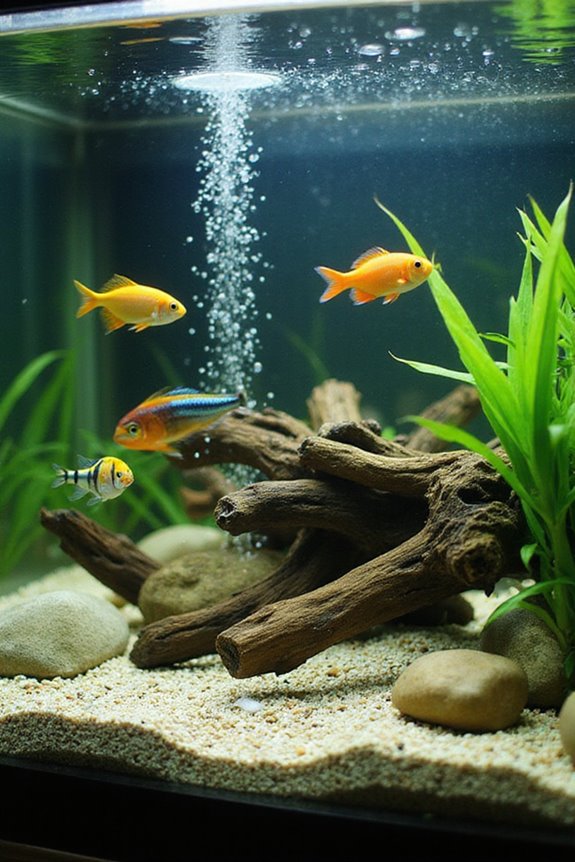
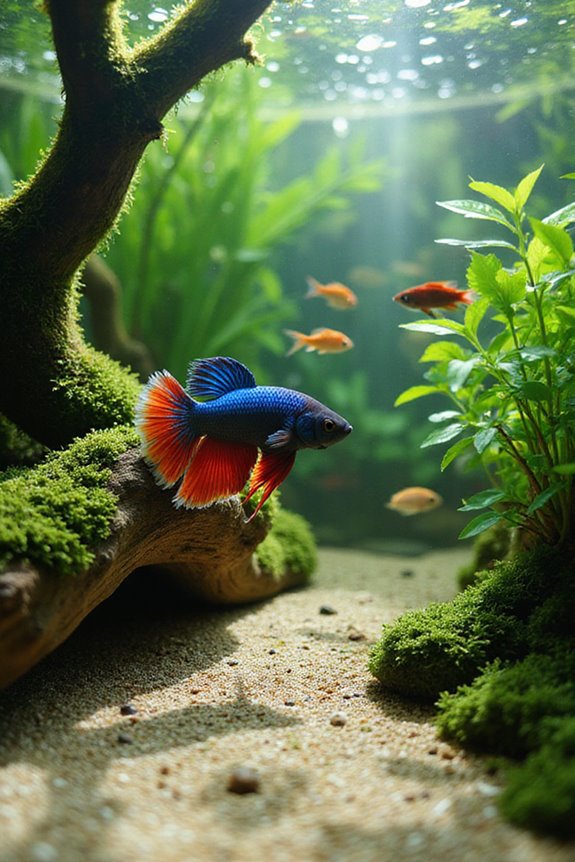
When selecting tank mates for your betta fish, consider peaceful species like Harlequin Rasboras, Cardinal Tetras, and Guppies. These fish thrive in groups and create dynamic visuals. Cory Catfish are great bottom dwellers; they help maintain cleanliness. Aim for a minimum tank size of 20 gallons to reduce aggression, and provide ample hiding spots for safety. Monitor behavior closely during introductions to guarantee harmony. If you want to enhance your aquarium setup further, continue exploring compatible options.
Key Takeaways
- Harlequin Rasboras thrive in groups and add visual interest without provoking aggression in bettas.
- Cardinal Tetras are vibrant swimmers that can coexist peacefully with bettas in a well-maintained tank.
- Guppies adapt well to community tanks and prefer being in groups, making them suitable companions.
- Cory Catfish are bottom dwellers that help keep the tank clean and do not compete for space with bettas.
- Ensure at least a 20-gallon tank size for compatibility and to minimize aggression among tank mates.
Understanding Betta Fish Behavior
You may be interested
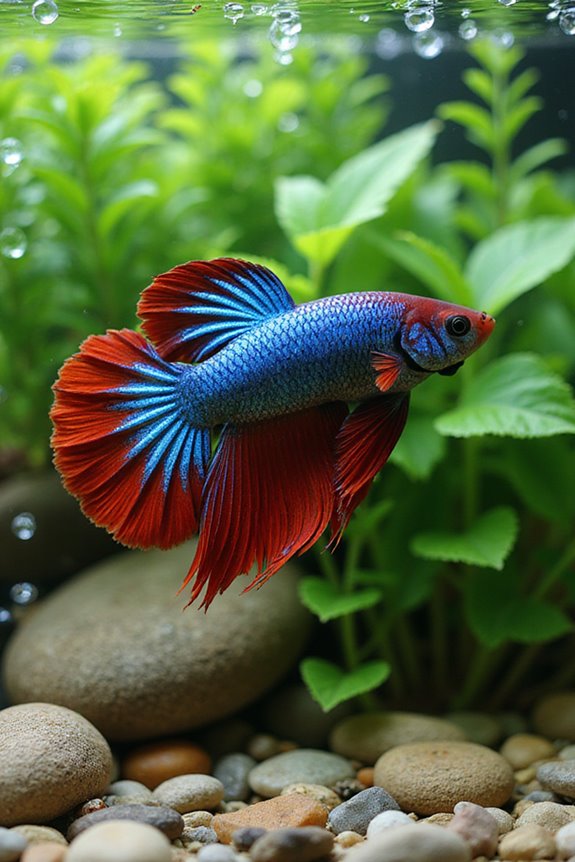
When I think about betta fish behavior, I realize that their activity patterns are important for any aquarist to grasp. Healthy bettas actively swim and explore their environment, so providing adequate environmental enrichment is key. You’ll often see them flaring their fins, a display of aggression triggered by perceived intrusions or rival fish. However, when stressed, they may hide at the tank’s bottom or seek refuge in plants. It’s critical to recognize stress indicators, such as lethargy or excessive hiding, as these can impact their well-being. Understanding their territorial instincts is significant, especially for males, who may become aggressive toward tank mates. By creating a balanced environment, you’ll promote positive social dynamics and reduce aggression triggers.
Choosing the Right Tank Size
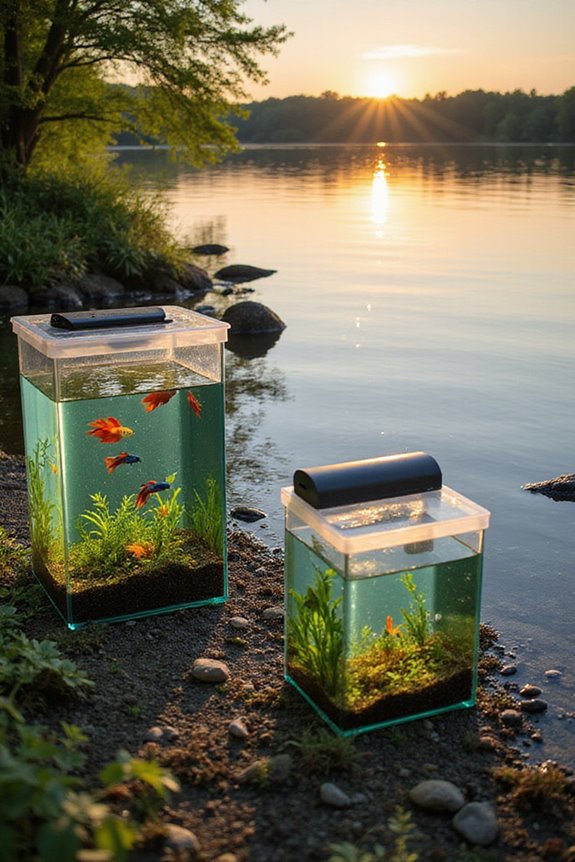
Choosing the right tank size for your betta fish is crucial for their health and happiness. A minimum tank size of 5 gallons is generally recommended. Tanks smaller than this can lead to fluctuating water quality, causing stress for your betta. Aim for a tank width of at least 12 inches; this allows your fish to swim comfortably and access the surface for air. A 5-gallon tank strikes a balance, providing enough space for swimming and stable water conditions. It also allows for proper filtration and heating systems, which are essential for maintaining water quality. Larger tanks, like 10 gallons or more, offer even better stability and room for compatible tank mates, enhancing your betta’s environment considerably.
Essential Tank Conditions for Betta Compatibility
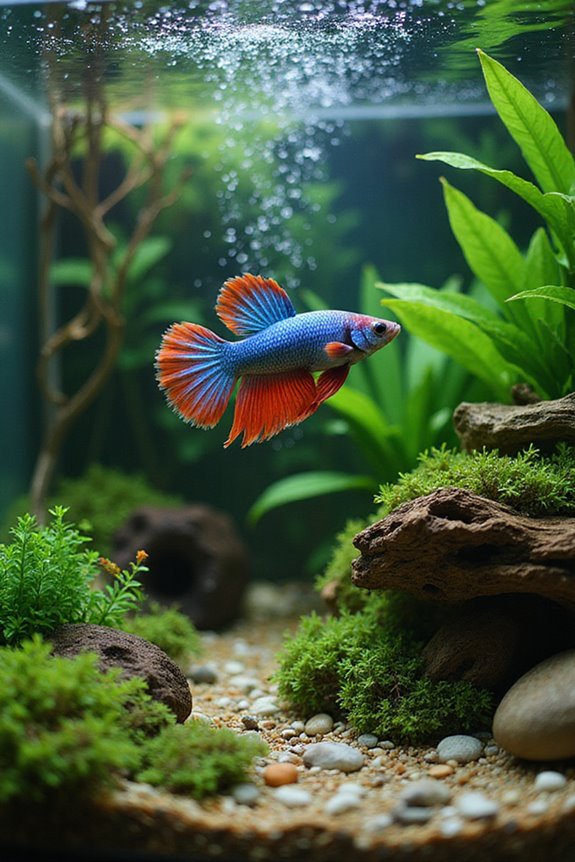
Creating the ideal tank conditions for your betta fish is essential for their well-being and compatibility with other tank mates. First, maintain a water temperature between 76°F and 81°F using a reliable aquarium heater. Avoid placing the tank near drafts or direct sunlight to prevent fluctuations. Next, guarantee pH stability by keeping levels between 6.8 and 7.5; use water conditioners during changes to eliminate harmful chemicals. Regularly test the water using reliable pH kits. Additionally, provide calm water flow by using filters designed for slow-moving currents, and clean them frequently to prevent toxin buildup. Finally, create a stable environment by avoiding high-traffic areas and ensuring all tank mates have similar temperature and pH needs for harmony.
Recommended Products

★10 Watt Aquarium Heater: Temperature range is 59-93°F, for small glass or acrylic aquariums up 1 to 5 gallons, can be used for both fresh and marine water, ideal for fish tanks and turtle tanks. Please choose the right wattage aquarium heater according to our size chart

Beep Alarm, Fault Prompt: Our nano aquarium heater has safety features such as low water level shutdown and overheat protection. When the temp control system detects a malfunction in the equipment, it will give an error code alarm and stop heating to prevent any potential damage or injury. Note: Although the system will automatically turn off the power when a malfunction occurs, residual heat in the heating rod may melt the shell. Please handle it as soon as possible

SUPER MINI SIZE – This mini fish tank heater is just about the size of a finger. It's fantastic for nano tanks/betta tanks. The groundbreaking super tiny design brilliantly addresses the fish keepers' annoyance with traditional heaters! Occupies less space, easy to tuck away, but packs a punch in power! Temperature ranges between 64-93℉, suitable for 1-3 Gallon tanks.
Peaceful Fish Species Compatible With Bettas
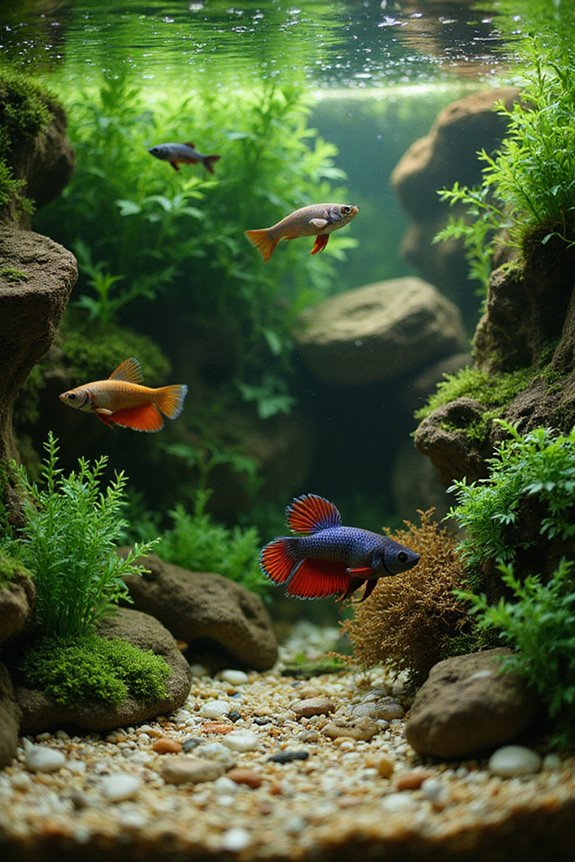
Finding compatible tank mates for bettas can enhance their environment and overall health. For peaceful schooling, consider adding Harlequin Rasboras. These small, bright orange fish thrive in groups of at least six, providing visual interest without overwhelming your betta. Cardinal Tetras are another excellent choice, known for their vibrant colors and rapid swimming, which helps them evade potential aggression. Guppies also make colorful companions; they adapt well to similar water conditions and prefer to be in groups to reduce stress. Finally, Cory Catfish can serve as a playful bottom-dwelling team that keeps the tank clean while not competing for space. Remember to maintain a minimum tank size of 20 gallons to accommodate these species comfortably.
Recommended Products


Pack of 6 Galaxy Rasboras – Add a beautiful group of Galaxy Rasboras, also known as Celestial Pearl Danios, to your freshwater aquarium for color, movement, and natural schooling behavior.

Dive into the world of vibrant aquariums with our school of 6 Emerald Rasboras. These beautiful and peaceful fish are perfect for adding color and tranquility to your freshwater tank.
Bottom-Dwelling Tank Mates for Betta Fish
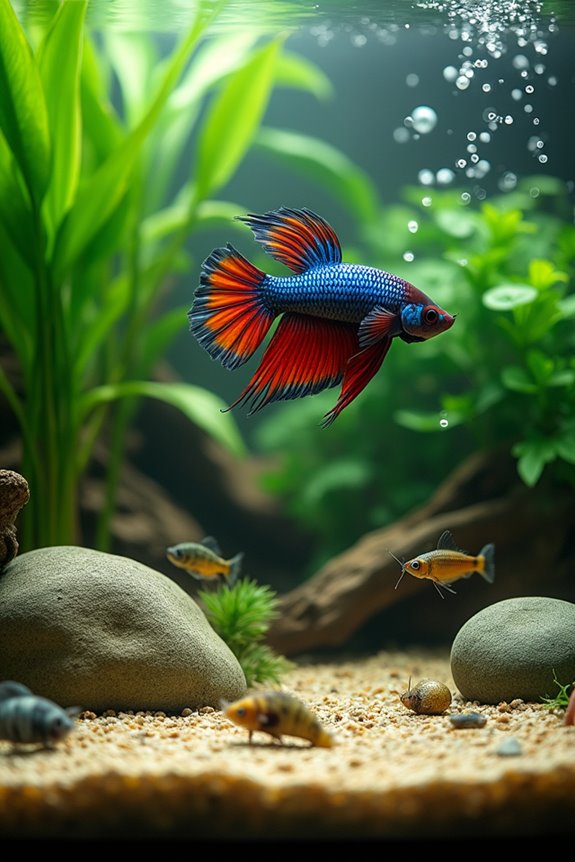
When setting up a community tank with betta fish, incorporating bottom-dwelling tank mates can create a balanced and harmonious environment. Corydoras compatibility makes them excellent choices, as they thrive in groups of at least four and actively forage at the bottom without intruding on betta territories. Otocinclus catfish also serve well, as they help control algae while remaining non-aggressive. Additionally, Kuhli loaches exhibit peaceful loach behavior and prefer low-light conditions, minimizing interactions with bettas. Make certain these species have plenty of hiding spots and a softly textured substrate to thrive. Maintaining stable water parameters compatible with bettas will support a healthy community tank. I recommend using a gentle filter to avoid disturbing these bottom dwellers.
Recommended Products

High Palatability : Sword Prawn Flavor - A blend of wild sword prawns, fresh squids, vegetables and seaweed. A perfect 7:3 meat/vegetable protein ratio even the pickiest bottom feeding fish can’t resist. Quickly soften with water and does not disintegrate easily. Suitable for bottom feeder that use live bait as their staple food
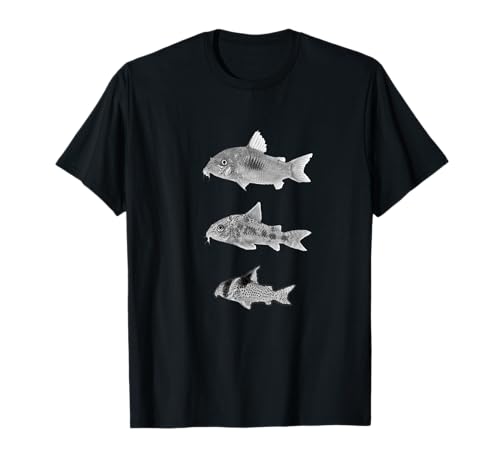
Bronze Corydoras Peppered Corydoras Catfish for keepers owners and breeders of corydoras the bottom feeder fish.Aquarium

Adorable Panda Pattern – Panda Corydoras are loved for their unique black-and-white markings and peaceful nature, making them a favorite for community aquariums. Active Bottom Swimmers – These social catfish constantly explore the tank bottom in groups, adding life and movement to the aquarium.
Shrimp and Invertebrates as Tank Mates
Introducing shrimp and invertebrates to a betta tank can enhance the aquatic environment, providing both visual interest and beneficial tank dynamics. For shrimp compatibility, consider ghost shrimp, Amano shrimp, and bamboo shrimp, as they’re generally less likely to be seen as prey. Confirm your tank is at least 5 gallons, equipped with plenty of hiding spots like plants and decorations to help shrimp evade bettas. Gentle filtration is essential to keep the environment stable. When feeding, provide bettas with a diet rich in protein, like brine shrimp, while offering algae wafers to shrimp. Observe invertebrate behavior carefully; some bettas may display aggression, so monitor interactions closely to confirm a peaceful coexistence.
Recommended Products

Aquarium Decor: Shrimp hides for aquarium provides a safe resting space for shrimp, fighting fish, and small fish, effectively isolating aggressive species, promoting relaxation and improving their overall health and comfort.

🔍 WATCH SHY PETS WITHOUT DISTURBING THEM – This aquarium underground tunnel sits flush against the glass, creating a clear viewing window so you can observe shrimp, betta, loaches, corydoras, and nano fish as they rest, explore, or pass through their hidden space.

🌿 All-in-One Aquarium Solution – Combines a floating cave, hammock, feeder, and hideout for Bettas, shrimp, Corydoras, and small fish. Enhances tank enrichment and reduces stress—now with U.S. Patent Pending innovation.
Recommended Frogs and Amphibians for Betta Tanks
Aquatic enthusiasts often seek suitable companions for their betta fish, and African dwarf frogs stand out as a prime choice. These peaceful amphibians, known scientifically as Hymenochirus boettgeri, thrive best in 10-gallon tanks or larger. For ideal frog compatibility, keep at least two frogs together, as they exhibit social behavior. Guarantee the tank has ample hiding spots and aquatic plants to minimize territorial aggression from bettas. Regularly monitor their interactions, as individual betta personalities can influence behavior. Frogs add fascinating tank enrichment with their surface breathing and skin-shedding habits, providing visual interest. Feeding them small live or frozen foods keeps both species content, resulting in a balanced ecosystem that enhances the overall aquarium experience.
Recommended Products

Invert Aquatics Frog Bites - Moist Pellet Sinking Diet for Frogs & Small Amphibians (1.5 oz (42.5g))
Quick Sinking, Moist Sinking Pellets, Advanced Daily Nutrition

HALF MOON AQUARIUM KIT: Clear plastic, half-moon-shaped front allows for unobstructed viewing.

Target Feeding Made Easier - The african dwarf frog feeding tube guides pellets or thawed food toward the basin, helping slow bottom feeders find meals with less chasing. Use it as an african dwarf frog feeder tube or african dwarf frog tank feeder for more controlled daily feeding.
Species to Avoid When Keeping Bettas
Selecting the right tank mates for betta fish is essential to maintaining harmony in your aquarium. First, avoid brightly colored fish, as they can provoke aggression in your betta. Long-finned fish, like fancy guppies, should also be excluded, since they may trigger your betta’s territorial instincts. Fin nipping fish, such as Tiger Barbs, can stress your betta by continually nipping at its fins. Additionally, steer clear of aggressive species that might compete for space and food, leading to conflict. Fish that resemble bettas in shape should be avoided, too, as they can spark unnecessary aggression. By carefully selecting compatible species, you can create a peaceful environment for your betta and its tank mates.
Tips for Creating a Harmonious Community Tank
Creating a harmonious community tank for your betta fish requires careful planning and attention to detail. Start with a minimum tank size of 10 gallons, which provides ample swimming space to minimize territorial aggression. Use low-flow filtration to maintain gentle currents, as strong water movement can stress your betta. Incorporate dense plant cover and hiding spots, like caves and driftwood, to promote stress reduction by breaking lines of sight. Choose peaceful, small fish and bottom-dwellers to lessen competition. Gradually acclimate new tank mates, introducing them before your betta to establish territory. Monitor interactions closely in the first few weeks, and maintain stable water conditions to guarantee a healthy environment for all species in your community tank.
Final Thoughts on Bettas and Their Tank Mates
When considering betta fish and their tank mates, it’s essential to recognize the unique needs and behaviors of these vibrant creatures. Bettas are naturally territorial, so choosing compatible species is critical for their health. Ideal tank mates, like Corydoras catfish and Neon tetras, should be peaceful and occupy different water levels to reduce stress. A larger tank with plenty of hiding spots can help minimize aggression. Regular tank maintenance is important; maintaining water parameters around pH 7.0-8.0 and temperature 72-81°F supports betta health. Always monitor new additions closely for signs of stress, and consider quarantining new fish before introducing them to the main tank. Following these guidelines will create a harmonious environment for your betta and its companions.
Frequently Asked Questions
Can Bettas Recognize Their Owners or Other Fish?
I’ve noticed my betta recognizes me, often swimming toward me when I approach. Their ability to distinguish between owners and their interactions with other fish shows fascinating aspects of bettas recognition and fish socialization.
How Often Should I Feed Tank Mates With Bettas?
When I think about feeding frequency for my fish, I guarantee my tank mates get compatible foods too. I usually feed them once or twice daily, adjusting portions to keep everyone happy and healthy.
What Decorations Are Safest for Betta Tanks?
When decorating my betta’s tank, I prioritize safe materials like fish-safe plastics and ceramics. These not only enhance tank aesthetics but also guarantee my betta’s safety, preventing injuries while creating a beautiful environment for exploration.
Can I Use a Filter With Betta Tank Mates?
Using a filter in a betta tank is like having a gentle breeze on a warm day; it keeps everything fresh. I find sponge filters ideal for tank maintenance, ensuring calm waters for all my fish.
How to Introduce New Fish to a Betta Tank?
When I introduce new fish to my betta tank, I focus on tank acclimation and stress reduction. I gradually adjust water conditions and keep the environment calm, ensuring a smoother adjustment for everyone involved.