As an Amazon Associate, we earn from qualifying purchases. Some links on this site are affiliate links at no extra cost to you. Our recommendations are based on thorough research and editorial judgment.

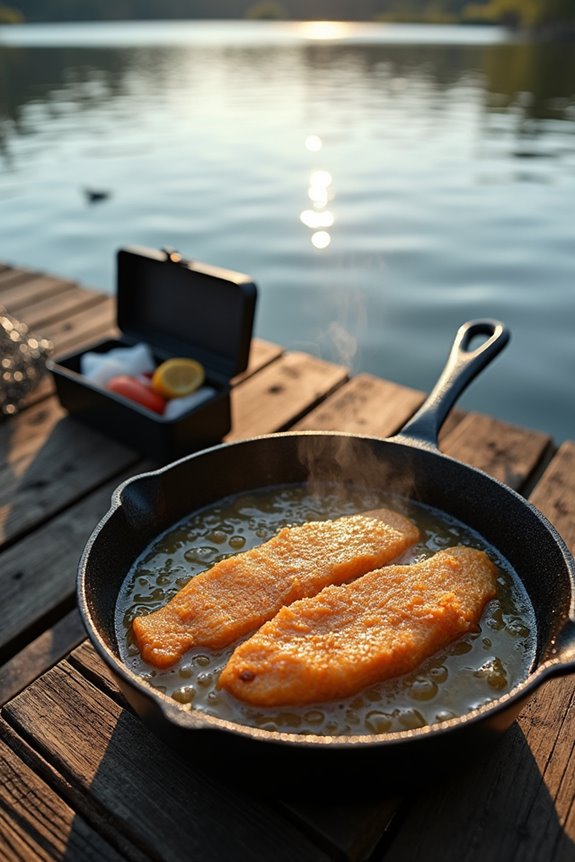
How Long to Deep Fry Fish? Cooking Times Guide

To deep fry fish, I recommend cooking times based on thickness. For fillets about 1 cm thick, fry for 3 minutes. Thicker fillets, like 2 cm, need about 4 minutes. For 3 cm fillets, aim for 6 minutes. If you’re using whole gutted fish (300-500g), plan for 10-12 minutes. Preheat your oil to 400°F before adding the fish and keep it between 350°F and 375°F for the best results. There’s more I’d like to share on fry techniques and tips.
Key Takeaways
- For fillets around 1 cm thick, fry for about 3 minutes until opaque and flaky.
- Cook 2 cm thick fillets for approximately 4 minutes; 3 cm thick fillets require around 6 minutes.
- Thicker cuts over 1 inch should be fried for 5 to 7 minutes, depending on the fish type.
- Whole gutted fish weighing 300-500g take about 10 to 12 minutes to cook thoroughly.
- Always check for an internal temperature of 145°F (63°C) for safe consumption.
Ideal Oil Temperature for Deep Frying Fish
You may be interested

When deep frying fish, maintaining the right oil temperature is essential for achieving that perfect crispy texture. The ideal frying temperatures range between 350°F and 375°F. This range prevents fish from absorbing excess oil, keeping them crispy and not greasy. I recommend using an electric fryer with a thermostat for consistency, or a heavy pot with a thermometer on the stovetop. Before adding fish, preheat the oil to about 400°F to maintain that perfect temperature when the cold fish is introduced. Fry in small batches to avoid overcrowding, which can cause the oil temperature to drop. Monitoring oil temperature closely guarantees the fish cooks evenly, yielding a golden-brown exterior without sogginess. Similar to how a KastKing Spartacus II fishing reel requires regular maintenance for optimal performance, your cooking equipment needs proper care to maintain consistent temperatures throughout the frying process.
Recommended Products

ACCURATE FAST READINGS (No More Burned Candy) --- Our candy deep fry thermometer provides instant and accurate temperature readings within seconds. Its advanced technology ensures precise measurements, allowing you to monitor the temperature of your food with confidence.

Pot Clip Design for Safer Operation: This candy thermometer digital with clip can be fixed to the pot so you can free your hands to focus on the cooking, and protect your hands from the hot

【PRECISE CANDY & FRYING TEMPERATURE CONTROL】Dual-scale 100°F–500°F / 40°C–260°C with 304 stainless steel probe. Targeted candy stages printed on dial — Soft Ball, Firm Ball, Soft Crack, Hard Crack, Caramel, Jelly — plus ideal deep frying temperatures.
Recommended Cooking Times by Fish Thickness and Type
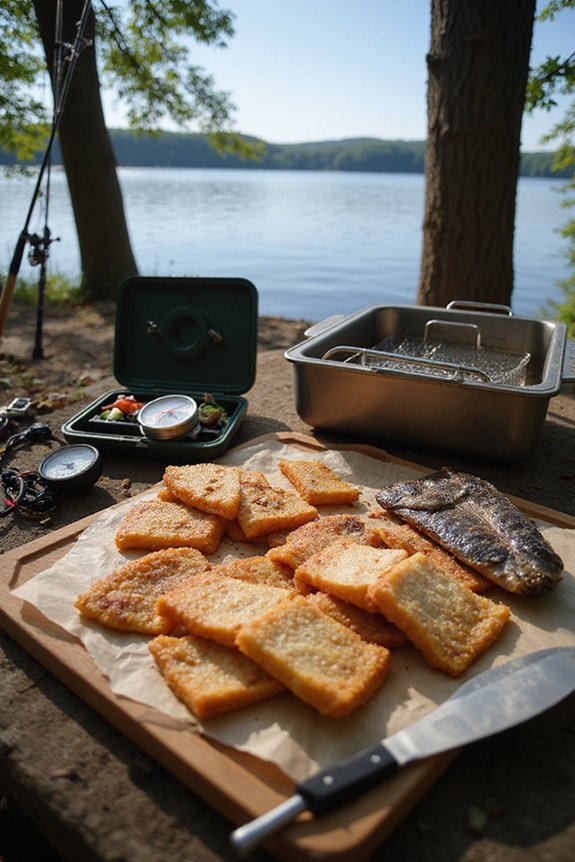
Understanding the recommended cooking times for deep frying fish is crucial for achieving that perfect balance of texture and flavor. For fillets around 1 cm thick, cook for about 3 minutes, while 2 cm thick fillets typically require around 4 minutes. If you’re working with fillets that are 3 cm thick, aim for approximately 6 minutes in the hot oil. Thicker cuts, over 1 inch, should be fried for 5 to 7 minutes, depending on the fish type. Cod fillets generally need 5 to 7 minutes, and haddock requires about 4 to 6 minutes. For whole gutted fish weighing between 300-500g, plan for 10 to 12 minutes to guarantee thorough cooking, adjusting for fish thickness. Consider using a quality stainless steel scaler to properly prepare your fish before frying, as clean scaling ensures even cooking and better texture in the final dish.
Recommended Products

【🎁Present Packing】Premium fish scaler tool with a decent package is an ideal gift 💝 for all people who love kitchen life.

High Quality: Fish descaler tool is made of High-quality food safe 304 stainless steel, it is sturdy, durable,anti-rust,lightweight,long lifetime use .

【Remove Stubborn Scales with No Mess】: Scaling fish can be a messy and frustrating task for seafood lovers. This Fish scaler changes the game by making scaling easy and convenient. It safely removes stubborn scales around the fins and belly of the fish, without damaging the skin or tearing the flesh. Specifically designed grooves help catch loose scales, preventing them from flying around your kitchen and creating a mess.
Signs and Standards for Doneness
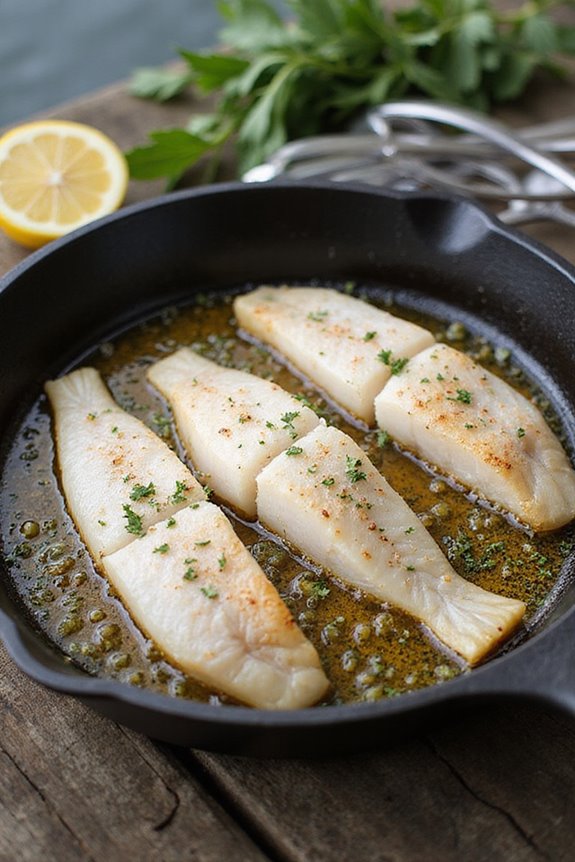
To guarantee your deep-fried fish reaches ideal doneness, look for specific visual and tactile indicators that confirm it’s fully cooked. First, check the flesh; it should appear opaque and flake easily with a fork. The center of the thickest part must be free of any raw or translucent spots. For doneness indicators, gently press the fish; it should yield slightly, similar to the softness of a nose. Aim for an internal temperature of 145°F (63°C) using an instant-read thermometer for accuracy. After frying, let the fish rest briefly on a rack to allow excess oil to drain, enhancing texture and flavor. Proper cooking techniques guarantee you enjoy perfectly fried fish every time. Regular maintenance with proper reel oil can extend the life of your fishing gear when you’re catching fish rather than cooking them.
Maintaining Oil Quality and Temperature Stability
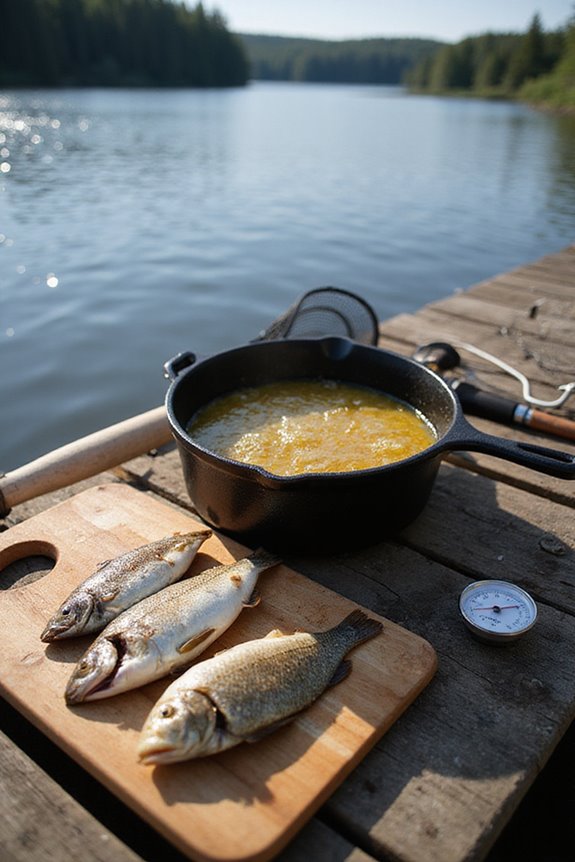
Maintaining oil quality and temperature stability is essential for achieving perfectly fried fish. I recommend using a thermometer to keep the oil between 350°F and 375°F, guaranteeing crispy batter and evenly cooked fish. To preserve oil quality, perform oil filtration after each use, straining out food particles that can degrade flavor. Store the filtered oil in a cool, dark place, preferably in a sealed container to extend its lifespan. Avoid overcrowding the fryer, as adding too many pieces cools the oil and leads to greasy fish. If you fry regularly, refrigerating oil can help maintain its quality. Always discard darkened or foul-smelling oil to prevent off-flavors and guarantee a delicious frying experience.
Recommended Products

【High Accuracy & Fast Reading】Digital candy thermometer get precise temperature readings in just 1 second with accuracy ±0.9°F, making it a smart choice for your candy making and deep frying
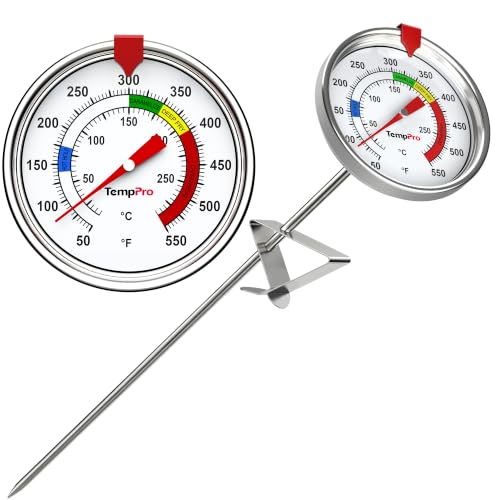
【9" Long Probe with Pot Clip】The frying thermometer for oil comes with a 9-inch probe and a secure pot clip, allowing it to be safely attached to cooking pots of different sizes, effectively protecting you from hot oil splatters
Preparation and Post-Frying Handling
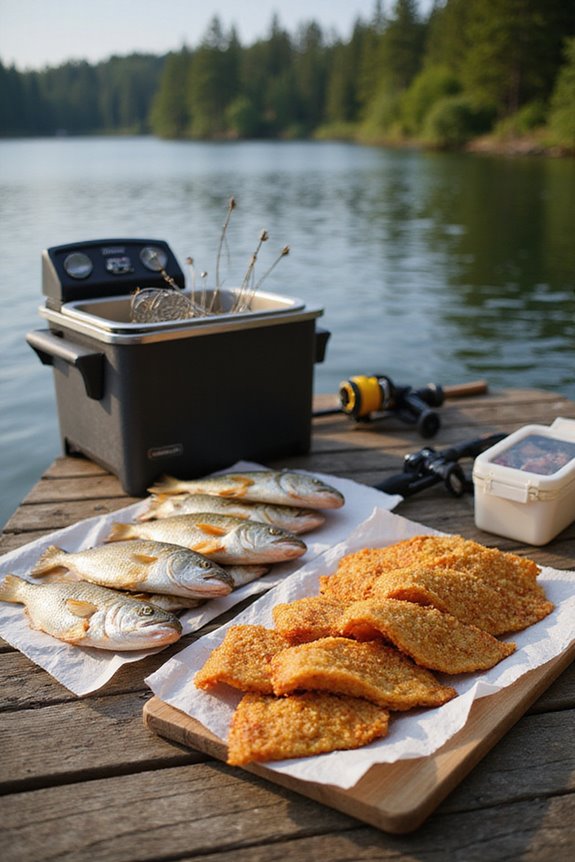
Preparation and post-frying handling are essential steps in achieving delicious, crispy fried fish. For fish fillet preparation, I start by ensuring the fillets are fully thawed, patting them dry with paper towels to improve adhesion. I season them lightly with salt and pepper before breading. I set up my coating stations with flour, beaten eggs, and breadcrumbs, dusting the fillets in flour first. After dipping them in eggs, I press them into breadcrumbs for even coverage. Once fried, I use a slotted spoon to remove the fish and place it on a wire rack over paper towels to drain excess oil. I let the fish rest for a couple of minutes to enhance crispiness before serving.
Recommended Products

Perfect for Your Kitchen: Looking for a way of surprising your loved ones with delicious, perfectly fried chicken or seafood? Would you like to make sure your shrimp or onion rings are always crispy and enjoy a perfect texture? The Gas One frying pot with perforated basket is the perfect solution!

✔ Product Information: The Grill Basket and Basting Brush are made of 430 food-grade stainless steel, which is reusable and strong, also rust resistant for long term use. Weight of brush is 2.11 ounce and the grill basket is 16.22 ounce

Premium Construction – Crafted from food-grade aluminum with temperature-resistant finishes, this 10qt deep fryer pot is built for daily use in various environments. The pure aluminum ensures even, fast heat conduction and easy cleaning for a seamless cooking experience.
Variations and Tips for Different Fish Types
When selecting the right frying technique for different fish types, understanding their unique characteristics can greatly enhance the final dish. For white fish like cod, I recommend a batter coating for crispy texture, frying for about 4-5 minutes. Oily fish, such as salmon, may need shorter frying times or slightly lower temperatures to prevent excessive oil absorption. Thicker fillets should be cooked at around 350°F for a longer period, ensuring even cooking. Using peanut oil is ideal due to its high smoke point. I suggest monitoring the color and texture of the coating, as a golden brown indicates readiness. Always check for doneness by ensuring the fish reaches an internal temperature of 145°F for safe consumption.
Frequently Asked Questions
Can I Reuse Frying Oil After Cooking Fish?
I’ve found that I can reuse frying oil after cooking fish, but I’m cautious. Proper oil storage is essential, and I avoid flavor absorption from previous frying to keep my dishes tasting fresh and delicious.
What Type of Batter Is Best for Frying Fish?
When frying fish, I love using beer batter for its light, crispy texture. Tempura batter also works wonders, offering a delicate crunch while letting the fish’s flavor shine. Both options are delicious for any fish dish!
How Do I Prevent Fish From Sticking to the Fryer?
When I deep-fried my first batch of fish, I learned fish preparation is key. Using the right frying techniques, like patting dry and preheating utensils, helped me prevent sticking and achieve that perfect crispy crust.
Can I Fry Frozen Fish Directly Without Thawing?
Yes, I can fry frozen fish directly without thawing. I find that using proper cooking techniques, like maintaining oil temperature and coating the fish, yields delicious, crispy results while ensuring it cooks thoroughly.
What Side Dishes Pair Well With Fried Fish?
You know, I’ve found that fried fish really shines with sides like coleslaw and a tangy tartar sauce. They balance the dish beautifully, enhancing flavors while keeping things light and revitalizing. What’s your favorite pairing?