As an Amazon Associate, we earn from qualifying purchases. Some links on this site are affiliate links at no extra cost to you. Our recommendations are based on thorough research and editorial judgment.
Can Goldfish Eat Betta Fish Food? Feeding Guide

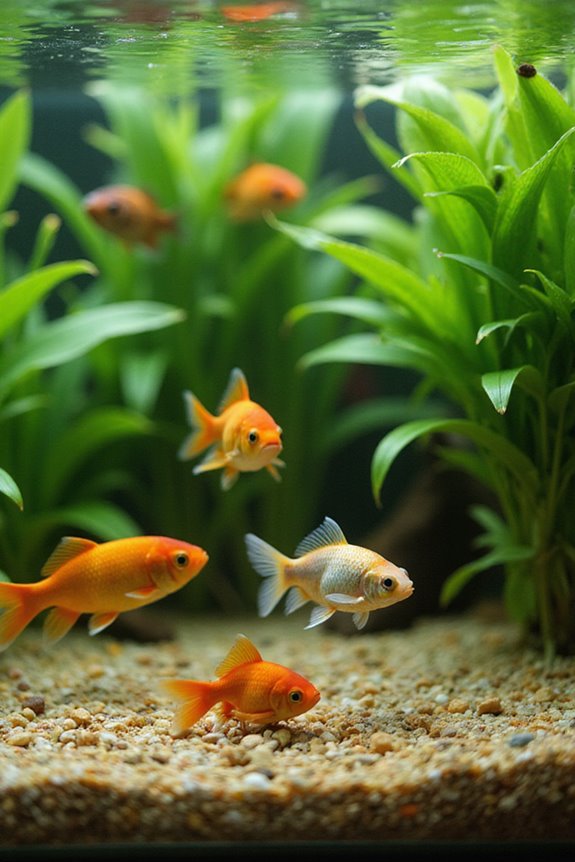
Goldfish should not eat betta fish food. Betta food is high in protein, which is not suitable for goldfish that require fiber for proper digestion. Feeding betta food can cause digestive issues like bloating and constipation in goldfish. Over time, this diet leads to nutritional imbalances and can harm their health. Use specialized goldfish flakes or sinking pellets instead. Monitoring your goldfish’s diet is essential for their well-being. You might find helpful tips on managing mixed fish species.
Key Takeaways
- Goldfish can eat betta fish food short-term but may experience mild digestive issues like bloating and constipation.
- Betta food lacks essential fiber, disrupting goldfish’s normal eating patterns and digestion.
- Long-term feeding of betta food can lead to nutritional imbalances and compromised immune systems in goldfish.
- Goldfish require a diet high in plant-based nutrients for optimal health, which betta food does not provide.
- It is recommended to switch back to goldfish-specific food immediately if any discomfort is observed.
Nutritional Differences Between Goldfish and Betta Fish Food
You may be interested

When comparing the nutritional differences between goldfish and betta fish food, it’s crucial to understand their distinct dietary needs. Betta fish food is high in protein, often containing animal-based protein sources like fish and shrimp meals, which cater to their carnivorous nature. In contrast, goldfish food is formulated with lower protein levels, emphasizing plant-based proteins and higher fiber content to suit their omnivorous diet. Goldfish require this fiber to aid digestion and prevent issues related to their slower metabolism. Their food often includes ingredients like algae and vegetables to mimic natural consumption. Similar to how different fishing line visibility affects catch rates underwater, the specific nutritional profile of each fish food type significantly impacts fish health and vitality. By recognizing these differences, you can guarantee your fish receive the right nutrition that aligns with their specific digestive requirements and overall health.
Recommended Products
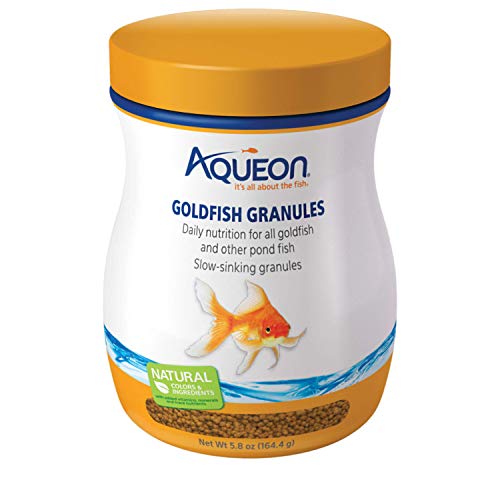
Natural ingredients and colors with added vitamins, minerals and trace nutrients
Short-Term Effects of Betta Food on Goldfish
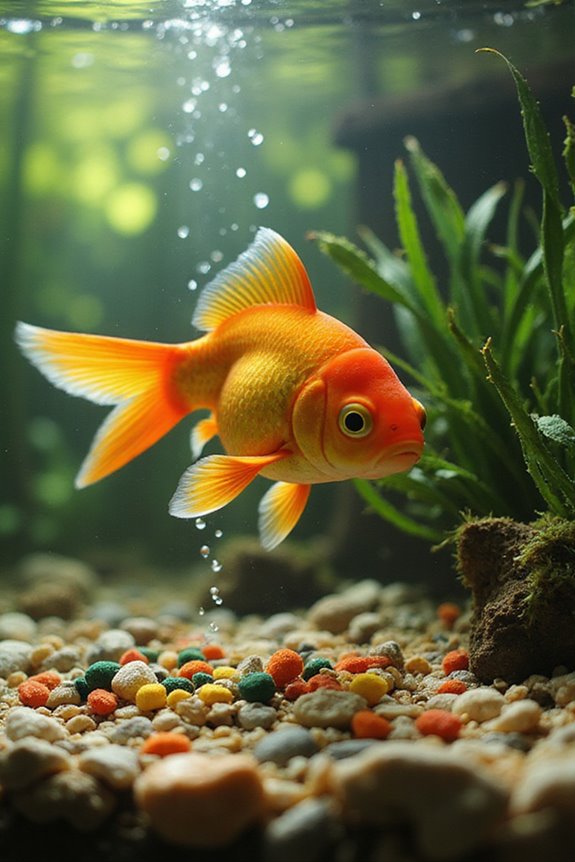
Short-term feeding of betta food to goldfish can lead to several digestive and nutritional challenges. Goldfish have longer digestive tracts that process plant-based diets, making them less suited for high-protein betta food. Even a brief period of 1–3 days can cause mild digestive distress, such as bloating or constipation. The richness of betta food might initially excite their feeding behavior, but it lacks essential fiber, potentially disrupting their usual eating patterns. This can lead to overeating and even swim bladder issues. Using the right fish scaling tools can help you prepare appropriate homemade alternatives if you temporarily run out of goldfish food. If you notice any signs of discomfort, like abnormal swimming or reduced mobility, it’s important to switch back to a goldfish-specific diet immediately. Resuming their proper food can help reverse these minor disturbances quickly.
Long-Term Health Risks of Feeding Goldfish Betta Food
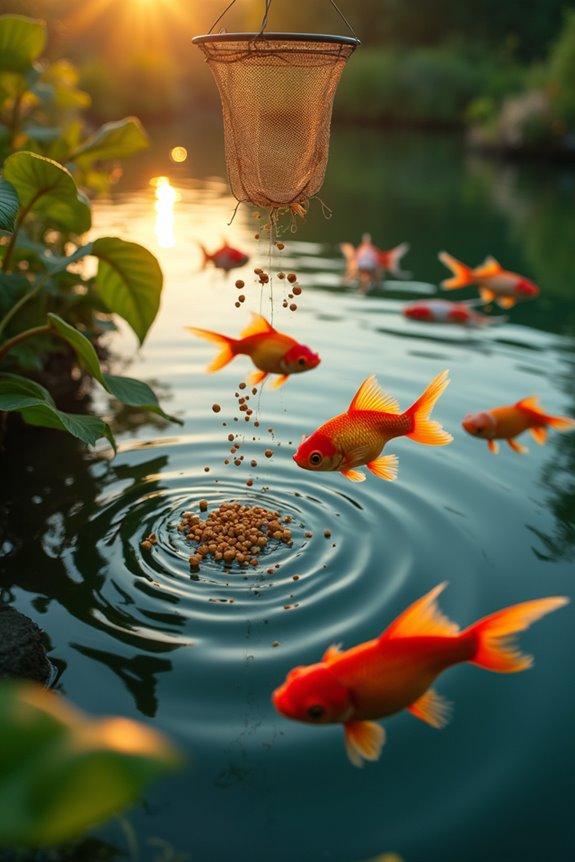
Feeding goldfish betta food over the long term can lead to serious health risks that every aquarium owner should be aware of. The high protein and fat content in betta food can create a nutritional imbalance, resulting in health consequences like immune deficiencies. Goldfish require a diet rich in fiber and plant-based nutrients to thrive; without these, they struggle with digestion and may become susceptible to infections. Over time, the lack of essential vitamins can compromise their immune system, leading to increased vulnerability to diseases. Using a proper braking system efficiency in your feeding routine can help prevent overfeeding, similar to how quality fishing reels need proper control mechanisms. Additionally, persistent obesity caused by inappropriate food can stress their cardiovascular system. All these factors contribute to a reduced lifespan and overall quality of life for your goldfish, making proper nutrition vital for their well-being.
Recommended Products

High Quality Ingredients : Our gold fish food is made from carefully selected natural ingredients, which are derived from fresh meat, vegetables and seaweed. No additives, artificial flavors, colors and other harmful ingredients. The main ingredients are Fresh fish, Antarctic krill, Astaxanthin,Spirulina, Wheat, Deep-sea fish oil, Carrots, Natural minerals, Vitamins(A, D3, C, E,B1, B2, B6 &B12)
Digestive Systems: Goldfish vs. Bettas
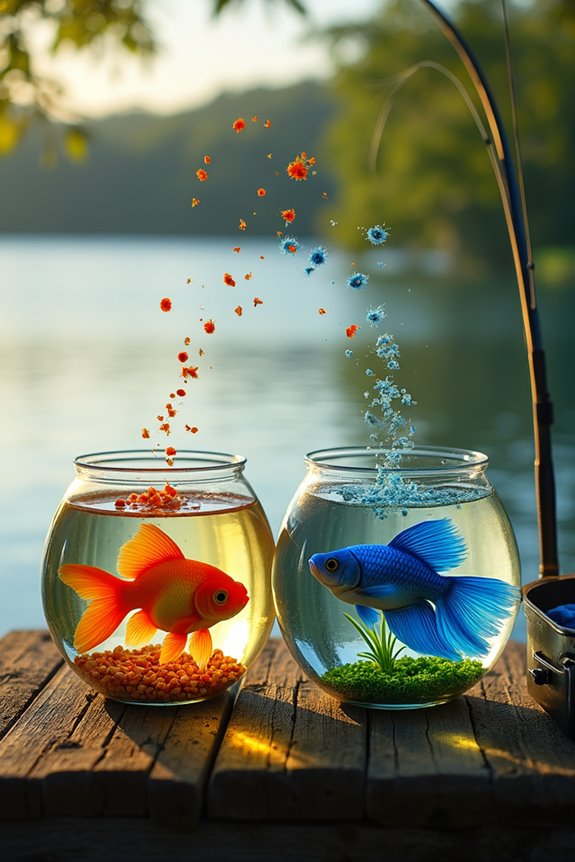
Understanding the digestive systems of goldfish and bettas is essential for ensuring their health and well-being. Goldfish have a longer, more complex digestive tract that supports a slower digestion process, reflecting their omnivorous diet. They rely on specialized enzymes that enhance digestive efficiency, breaking down plant matter effectively. In contrast, bettas possess a shorter digestive system optimized for rapidly processing high-protein diets, mainly consisting of insects. Their enzyme activity focuses on animal protein digestion, making them less equipped for fibrous foods. This fundamental difference means goldfish thrive on diets rich in carbohydrates and fiber, while bettas require protein-dense nutrition. Feeding betta food to goldfish can lead to digestive strain, illustrating the importance of matching food types to each species’ unique needs.
Recommended Feeding Practices for Goldfish
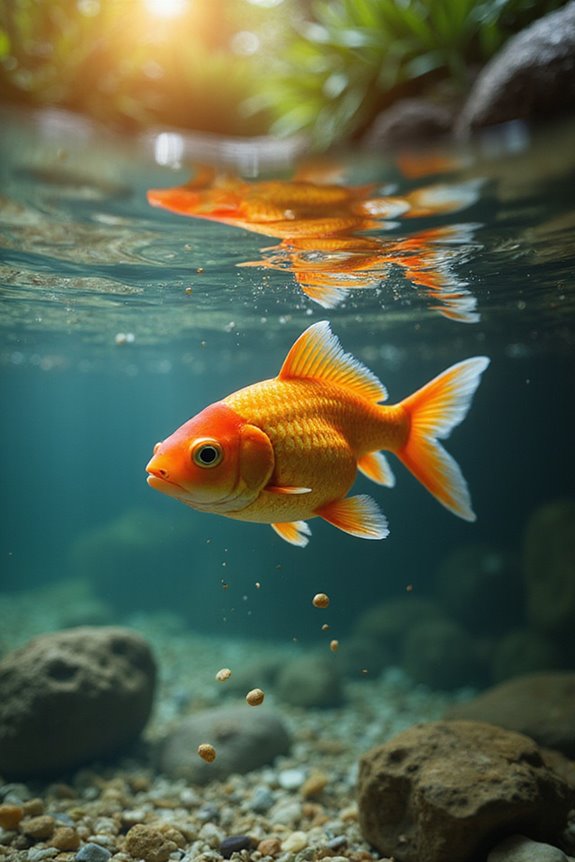
When caring for goldfish, it’s essential to establish a feeding routine that promotes their health and well-being. I recommend feeding them twice daily, ensuring you offer only what they can consume in about two minutes. This approach enhances digestion and minimizes waste. For young goldfish, smaller, more frequent meals support their growth. Use specialized goldfish flakes or sinking pellets, particularly for fancy varieties to prevent buoyancy issues. Occasionally, supplement their diet with frozen foods like brine shrimp or scalded peas for added nutrients. Spread food around the tank to encourage foraging and reduce competition. Remember to adjust feeding frequency and amounts during colder months when their metabolism slows down, keeping their overall health in check.
Managing Diets in Mixed Species Aquariums
Managing diets in mixed species aquariums can be quite a challenge, especially since different fish have unique feeding habits and preferences. I recommend adopting specific feeding strategies to guarantee all species receive adequate nutrition. Start by offering small portions, reducing waste and maintaining water quality. Use a variety of food types tailored to each fish’s mouth size, distributing food at various tank levels. To manage competition, feed aggressive species at one end while providing timid fish access at the other. Employ targeted feeding techniques, like using a pipette for specialized diets. Monitor feeding behavior, and adjust your approach as needed. Regularly cleaning uneaten food will also help maintain a healthy environment for all your aquatic residents.
Frequently Asked Questions
Can Goldfish Survive Solely on Betta Food for a Week?
I’d say goldfish can survive a week on betta food, but it’s not ideal. Their nutrition needs differ, and a betta diet lacks essential nutrients for goldfish, risking health issues over time.
What Symptoms Indicate a Goldfish Is Unwell From Betta Food?
Imagine a goldfish struggling to swim through a heavy fog—those are the goldfish symptoms I notice when betta food’s effects take hold. Bloating, lethargy, and poor appetite signal it’s time for a diet change.
How Often Can Goldfish Eat Betta Food Safely?
When considering feeding frequency, I’d recommend only giving goldfish betta food occasionally—once or twice a week. Frequent use can strain goldfish digestion and lead to serious health issues. Always prioritize a proper diet for them.
Are There Any Betta Food Brands Safer for Goldfish?
I’ve found that some safe betta brands, like those using spirulina or kelp, can be better for goldfish nutrition. However, they should only be used sparingly alongside a proper goldfish diet for ideal health.
Can Goldfish Eat Other Carnivorous Fish Foods Besides Betta Food?
I’ve found that goldfish can occasionally eat other carnivorous fish foods, but it’s crucial to remember they need a balanced goldfish diet. Too much protein can lead to health issues, so moderation is key.