As an Amazon Associate, we earn from qualifying purchases. Some links on this site are affiliate links at no extra cost to you. Our recommendations are based on thorough research and editorial judgment.

How to Tell if Fish Is Bad: Freshness Signs

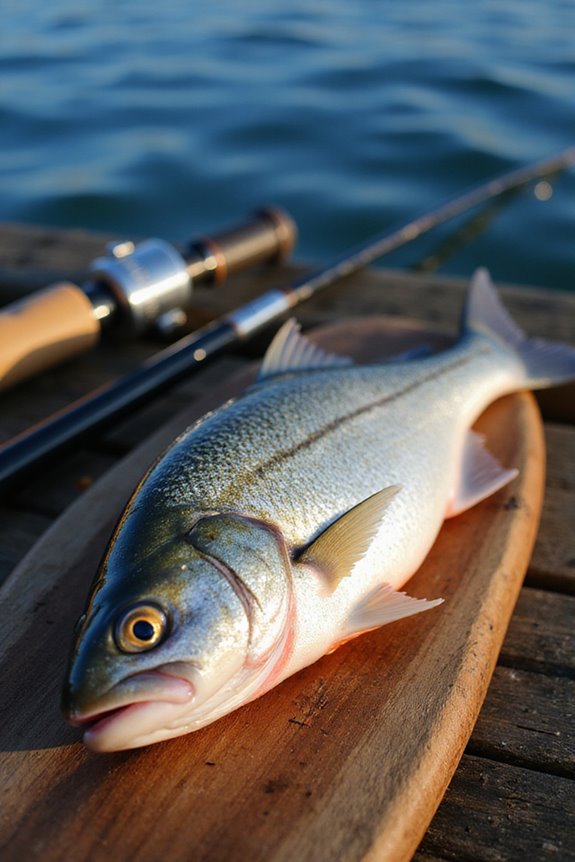
To tell if fish is bad, check for several key signs. Look for moist, shiny skin with tightly attached scales. Fresh fish has clear, bright eyes, red gills, and firm flesh that springs back when pressed. Smell near the gills; a mild scent means freshness, while sharp or sour odors indicate spoilage. For shellfish, verify the shells are tightly closed. If you’re unsure, there are more detailed signs to help you make the best choice.
Key Takeaways
- Fresh fish has clear, bright eyes; cloudy or sunken eyes indicate spoilage.
- Gills should be bright red or pink; grey or brown gills suggest the fish is bad.
- The flesh must be firm and spring back when pressed; an indentation signals spoilage.
- Fresh fish emits a mild, pleasant scent; sharp or ammonia-like odors indicate it’s gone bad.
- Skin and scales should be moist and shiny; dull or loose scales are signs of aging and spoilage.
Visual Signs of Fresh Fish
You may be interested


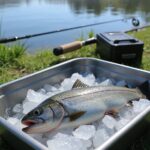
When evaluating the freshness of fish, visual signs play an essential role. Start with a visual inspection of the skin and scales; they should appear moist and have a shiny, metallic glow. Check that the scales are tightly attached and not loose. Next, observe the eyes; fresh fish have clear, bright, and slightly bulging eyes, while cloudy or sunken ones indicate spoilage. Don’t forget the gills; they should be bright red or pink, firm to the touch, and free of any milky slime. Finally, examine the flesh; it should be firm and maintain its shape when pressed. These freshness indicators collectively reveal a lot about the fish’s quality, ensuring you select the best catch for your next meal. For those practicing catch and release, quality fishing forceps can help minimize handling time and stress on fish you plan to return to the water.
Recommended Products

【Stainless Steel Material】 These piercing forceps are made of high-quality stainless steel, which has excellent rust and wear resistance, durability, and can bring you a long-term and reliable use experience
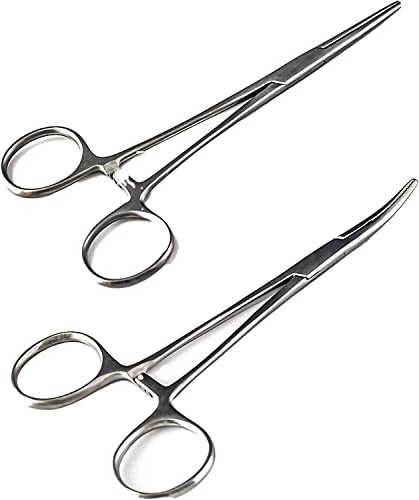
STAINLESS STEEL CONSTRUCTION: SURGICAL ONLINE Fishing Forceps measure 5.inches and are forged from durable stainless steel to ensure the highest quality and longevity. Comes in a set of two (curved & straight).
Olfactory Signs of Fresh Fish
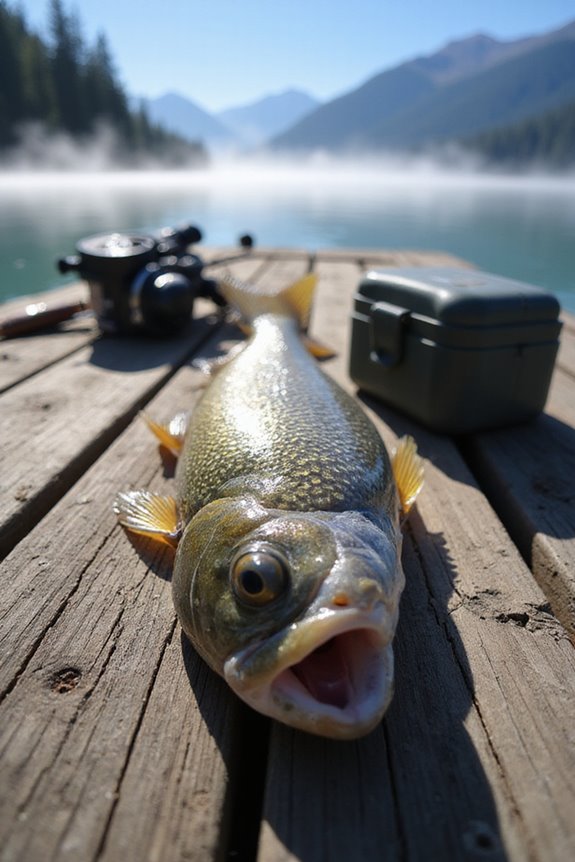
How can you tell if fish is fresh just by using your sense of smell? Trust your olfactory clues; fresh fish gives off a mild, pleasant scent, reminiscent of the sea, like briny air or seaweed. When you’re at the market, sniff near the gills or belly, where spoilage odors often appear first. Look for freshness indicators—a subtle, clean smell suggests quality. If the fish smells sharp, sour, or ammonia-like, it’s a sign of spoilage. Each species has its unique scent; for instance, freshwater fish might carry an earthy aroma, but they shouldn’t smell foul. In emergency situations while fishing, keeping a compact whistle nearby can help signal for assistance if you encounter dangerous conditions. Remember, freshness is key, so use your nose to help guarantee you’re bringing home only the best catch.
Tactile and Physical Texture Signs
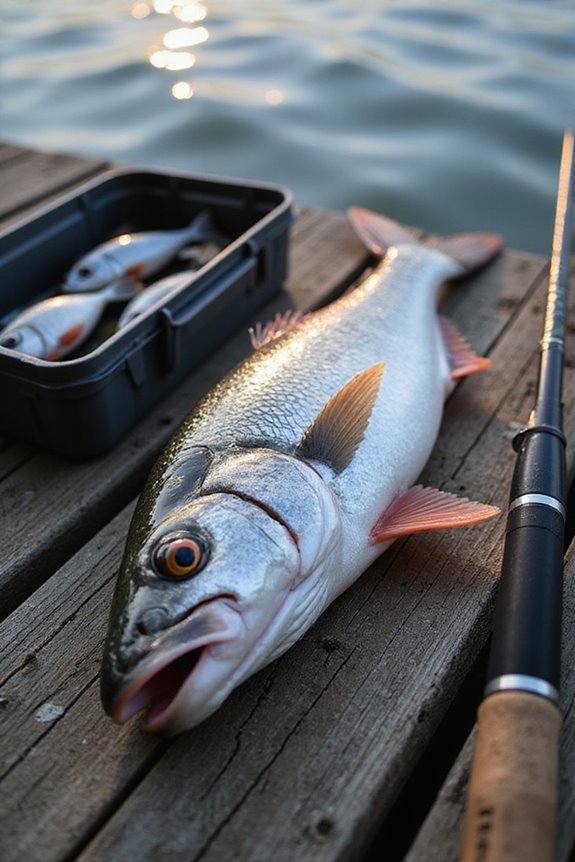
Tactile and physical texture signs play an important role in determining the freshness of fish. First, I assess firmness. Fresh fish should spring back when pressed; if it leaves an indentation, it may be spoiled. I also check for a moist surface without excessive sliminess. Next, I examine the skin and scales; shiny, intact scales indicate a recent catch, while loose or dull scales suggest age. For texture evaluation, I look for smooth, non-flaking surfaces without dryness. The flesh should feel dense and resilient, resisting flattening when bent. Finally, I avoid fish that feels sticky or excessively slimy, as these tactile indicators often signal spoilage. For fishermen who want to preserve their catch’s freshness, using a quality insulated bait bucket with a 1-inch foam liner can help maintain stable temperatures when transporting fish. Proper handling and storage are vital to maintaining these tactile qualities.
Specific Signs for Different Fish Parts
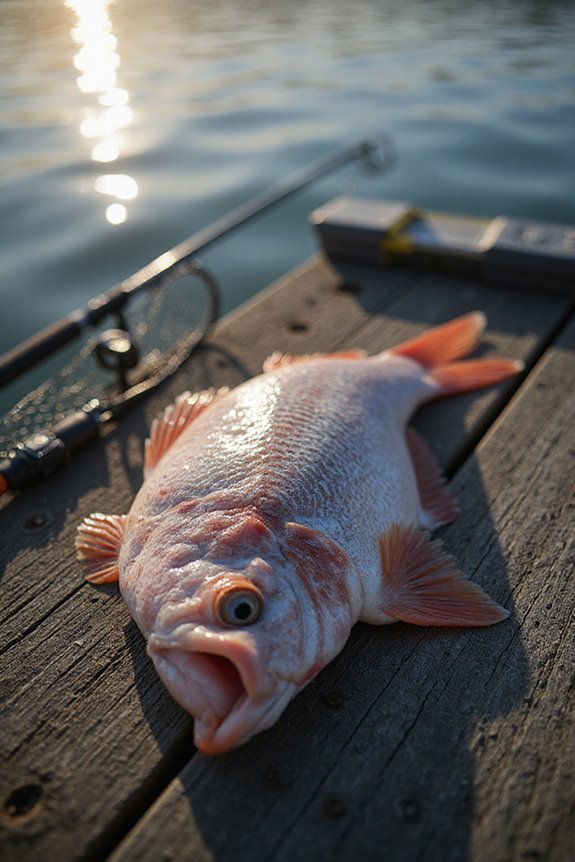
Understanding the specific signs of different fish parts is vital for evaluating freshness and guaranteeing a good catch. First, check the skin condition; it should be shiny and tight, with no slimy residue. Next, eye clarity is important; clear, bright eyes signal freshness, while cloudy ones suggest aging. Inspect the gill color; fresh fish have red or pinkish gills, while grey or brown indicates spoilage. Confirm belly integrity by looking for an intact membrane and no bloating. Examine fin texture; fins should be shiny and firmly attached. Finally, assess tail moisture; it should be moist and not dried out. Evaluate flesh firmness by pressing it; it should spring back, and confirm cavity cleanliness for the best quality.
Recommended Products

Professional Quality Testing Kit: The AAwipes Aquarium test kit (50 strips) is developed by experts for fish enthusiasts. It offers 8-in-1 testing capabilities, made with high-quality fiber paper and non-bleeding colors. The kit measures key parameters like Free Chlorine, Nitrate, Nitrite, Hardness, Sodium Chloride, Total Alkalinity, pH and Ammonia nitrogen. By identifying potential issues, our fish tank testing kit helps prevent hidden water problems and ensures the safety and well-being of your fish.

𝗛𝗼𝗺𝗲 𝗔𝗾𝘂𝗮𝗿𝗶𝘂𝗺 𝗪𝗮𝘁𝗲𝗿 𝗧𝗲𝘀𝘁 𝗞𝗶𝘁 - Ensure the health of your fish with aquarium water testing kit & ammonia test strips for fish tank. This complete freshwater & saltwater tank test kit provides a reliable water tester for ammonia, pH, iron, chlorine, total hardness (GH), carbonate, nitrate, nitrite, total alkalinity, copper, and temperature, allowing you to have a complete understanding of your aquarium water quality. Trusted by fish enthusiasts, it adapts to your needs, making it an essential tool for aquarium care.
Signs Specific to Shellfish
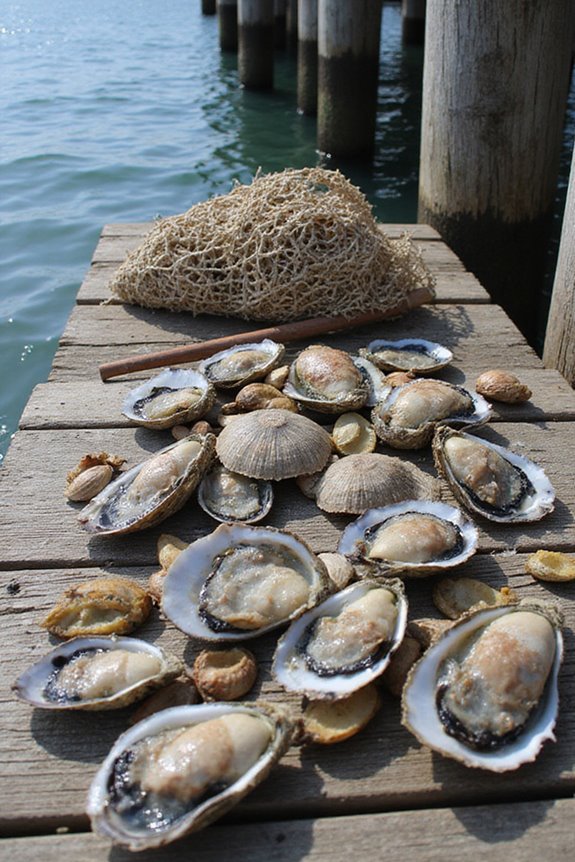
When evaluating the freshness of shellfish, what should you look for to confirm you’re getting the best quality? First, check the shells; they should be tightly closed or close when tapped. If the shells are open and don’t close, that’s a spoilage indicator. Next, examine the appearance: fresh shellfish should have a glossy sheen and consistent color. Avoid any with dryness or black spots, as these signal aging. The flesh should feel firm and resilient, not mushy or slimy. Finally, trust your nose; fresh shellfish should have a mild, briny aroma, while any strong, unpleasant odors indicate spoilage. By paying attention to these shellfish freshness signs, you can confirm you’re selecting the best for your meal.
Miscellaneous Freshness Indicators
Evaluating the freshness of fish goes beyond just visual checks and aromas; it also involves other physical indicators that reveal quality. Look for a natural gloss on the skin, which indicates the presence of natural oils. This sheen is a good sign of freshness. When handling the fish, make certain it feels firm and bounces back when pressed. If it’s sticky or has thick slime, it’s likely spoiled. The freshness temperature is vital, so guarantee the fish is kept chilled properly. Check for bright coloration in the flesh and absence of bruising or dark spots. These indicators, when combined with smell and visual checks, will help you confirm the fish’s freshness effectively.
How to Properly Store Fish
Properly storing fish is essential to maintaining its freshness and quality. Always place fish on the bottom shelf of your refrigerator, as this area offers the coldest and most consistent temperature. Wrap the fish tightly in moisture-proof packaging to avoid drying out and contamination. For an extra-cold environment, nest the fish on crushed ice in a container, replacing the ice as it melts. Use refrigerated fish within 1 to 2 days. If you’re freezing fish, wrap it tightly in moisture-proof bags beforehand to prevent freezer burn. Label packages with dates, following the FIFO (First In, First Out) principle. Thaw frozen fish in the refrigerator overnight for safe results, or use cold water methods when needed.
Recommended Products
1 case of 10 Packs, 10 Count Total

Dri-Loc O-ring seal
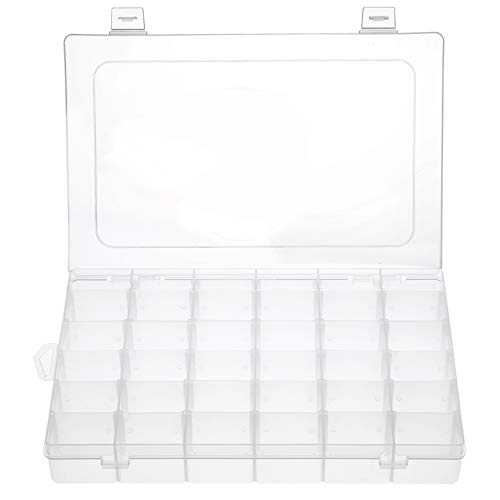
Removable dividers: The grid inside the box can be moved, so you can adjust the dividers to create your own size compartments.
Best Practices for Buying Fresh Fish
Selecting fresh fish starts with knowing where to shop. I always choose reputable seafood markets known for their sustainable sourcing and seafood safety practices. It’s crucial to avoid roadside stands or unregulated sellers, as they can increase contamination risks. I look for markets with clean, well-iced display cases and knowledgeable fishmongers who can discuss seasonal availability. When inspecting fish, I check for clear, bright eyes and firm, elastic flesh. I buy seafood last during grocery shopping to keep it cold and prevent spoilage. Finally, I make sure that fish is properly stored and displayed, avoiding any that show signs of being out of season. This approach helps me enjoy the freshest, safest seafood possible.
Frequently Asked Questions
Can I Eat Fish That Has a Slight Odor?
I wouldn’t risk eating fish with a slight odor. While some fish odors can indicate freshness, I always trust my instincts—strong or persistent smells are red flags, and I prefer to prioritize safety over taste.
How Long Can Fish Be Stored Before It Goes Bad?
When it comes to fish shelf life, I’ve learned it lasts 1-2 days in the fridge and up to several months in the freezer. Following proper storage tips helps guarantee freshness and safety.
What Should I Do if I Suspect Fish Is Spoiled?
If I suspect fish is spoiled, I always do a smell test first; any odd odors mean it’s time to toss it. Then, I perform a texture check for sliminess—definitely a no-go if it’s mushy!
Does Freezing Fish Affect Its Freshness?
Absolutely, I’ve found that freezing techniques really impact fish freshness. When done properly, it can extend storage duration considerably while preserving taste and texture, making frozen fish a great option to enjoy anytime without compromising quality.
How Can I Tell if Fish Was Previously Frozen?
Ever wonder how to spot previously frozen fish? Look for thawing signs like dull eyes, faded gills, and a softness that just doesn’t bounce back. These clues can reveal its journey from cold storage to your plate.