As an Amazon Associate, we earn from qualifying purchases. Some links on this site are affiliate links at no extra cost to you. Our recommendations are based on thorough research and editorial judgment.

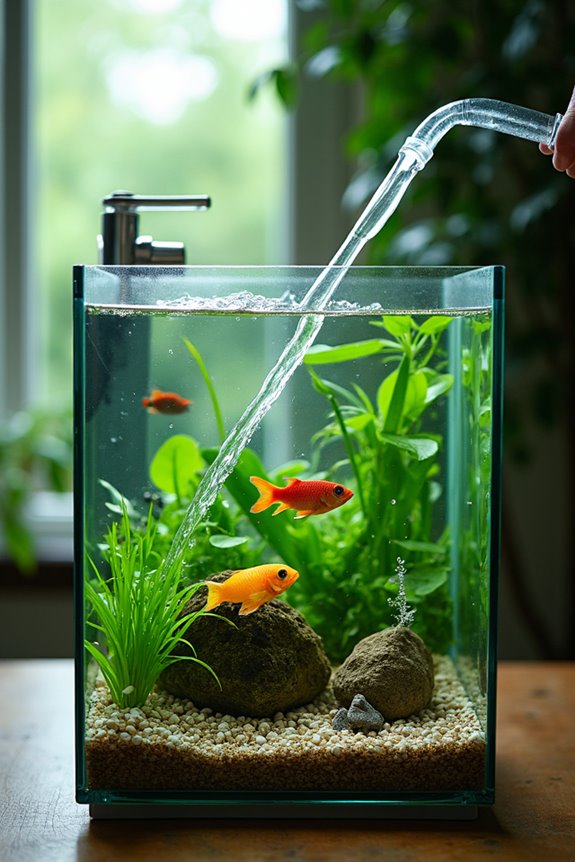
How to Change Fish Tank Water: Step-by-Step Guide

To change fish tank water, first gather a gravel vacuum or siphon, buckets for water, and a water testing kit. Prepare dechlorinated replacement water, matching its temperature and pH to the tank. Turn off equipment, then siphon out 10-25% of the water. Slowly add the new water to reduce stress on fish. Finally, restart the equipment and monitor fish health. Regular changes improve water quality and the wellbeing of your aquatic pets. Discover more essential tips ahead.
Key Takeaways
- Prepare replacement water by dechlorinating, matching pH and hardness, and adjusting temperature within 2°F (1°C) of the tank water.
- Use a siphon or gravel vacuum to remove 10-25% of water and eliminate waste.
- Slowly add the prepared water back into the tank to minimize stress on fish.
- Turn off all electrical equipment before starting and restart them after the water change is complete.
- Regular water changes help maintain a healthy environment by diluting toxins and replenishing essential minerals.
Understanding Water Change Frequency and Volume
You may be interested
When you’re managing a fish tank, understanding how often and how much to change the water is essential for maintaining a healthy environment. I usually change 10-20% of the water weekly in my lightly stocked tanks to maintain water quality. Heavily stocked tanks may require 50% changes every two weeks to control nitrate levels effectively. If I notice nitrates exceeding 80 ppm, I increase the water change frequency. Filtration efficiency plays a role too; a strong filter can reduce the need for frequent changes. I’ve learned that large changes can stress fish, so I balance volume and frequency. Infrequent changes can result in algae outbreaks, so I monitor my tank closely to prevent any issues. Just like with fishing, barometric pressure can affect fish behavior in tanks, especially during water changes when pressure fluctuations may occur.
Preparing Replacement Water
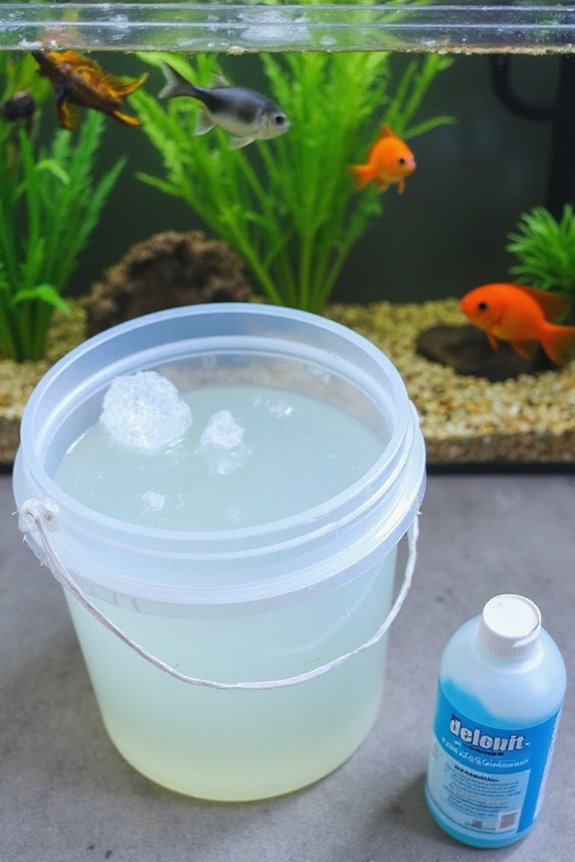
To prepare replacement water effectively, I guarantee that I use dechlorinated tap water or water from a trusted source, as this is essential for my fish’s health. I always check the replacement water quality by matching the pH and hardness to the existing tank water. To avoid stress on my fish, I gradually adjust the water temperature, ensuring it’s within 2°F (1°C) of the tank’s temperature. I use an aquarium heater or let the water sit at room temperature before testing it with an accurate thermometer. Additionally, I mix in a water conditioner to neutralize any harmful chemicals. Finally, I store the replacement water in a clean container and aerate it to increase oxygen levels before adding it to the tank. When using an automatic fish feeder during water changes, ensure it remains securely attached with the adjustable clamp or adhesive sticker to prevent it from falling into the tank.
Recommended Products

Contains one (1) API TAP WATER CONDITIONER Aquarium Water Conditioner 16-Ounce Bottle

Contains one (1) API TAP WATER CONDITIONER Aquarium Water Conditioner 4-Ounce Bottle

POWERFUL TREATMENT: Seachem Prime is a complete and concentrated conditioner for both freshwater and saltwater fish tanks, working hard to remove chlorine and chloramine.
Essential Equipment and Tools Needed
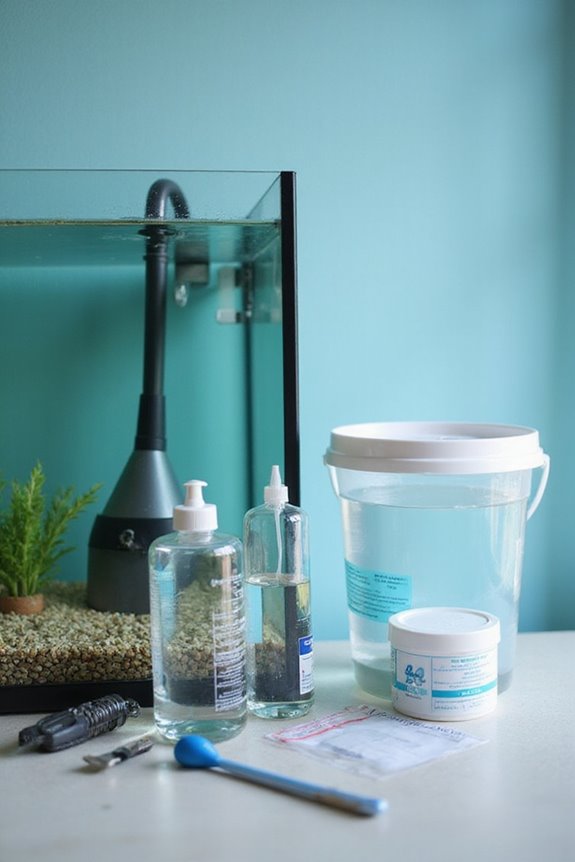
Gathering the right equipment and tools is essential for efficiently changing fish tank water. First, I recommend having a gravel vacuum or siphon ready for removing waste from the substrate. You’ll also need a few buckets marked for aquarium use, ensuring no contamination occurs. Algae scrapers or magnetic cleaners help with algae removal on the glass surfaces. For water testing, a reliable kit is vital to monitor pH, ammonia, nitrites, and nitrates before and after the change. Additionally, consider investing in a Python No-Spill Water Change System for hands-free water transfer. Finally, keep dechlorinators on hand to treat tap water before it’s added back into the tank. Having these tools at your disposal simplifies the entire process. For safety during outdoor water changes, carry an emergency whistle that can produce sounds up to 120 decibels to signal for help if needed.
Step-by-Step Water Change Process
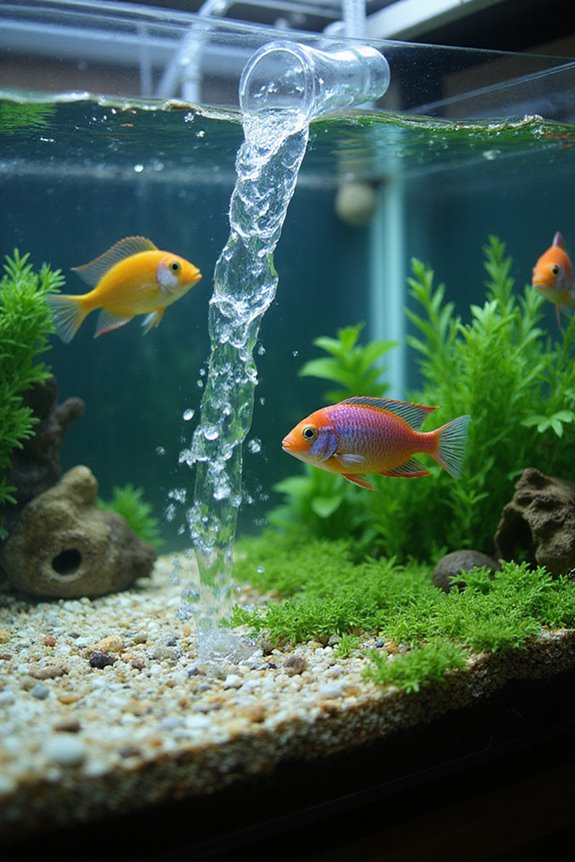
With the right equipment and tools gathered, it’s time to tackle the step-by-step process of changing fish tank water. First, I prepare the new water by conditioning it to remove chlorine and heavy metals, allowing it to sit for 24 hours to stabilize the pH and temperature. Next, I turn off all electrical equipment and remove decorations that may obstruct cleaning. Using a siphon or gravel vacuum, I carefully remove 10-25% of the water, ensuring I don’t disturb the substrate too much to maintain water quality. After that, I slowly add the prepared water back in, pouring it gently to prevent stress on my fish. Finally, I restart the equipment and monitor the fish health for any signs of distress.
Cleaning and Maintenance During Water Change
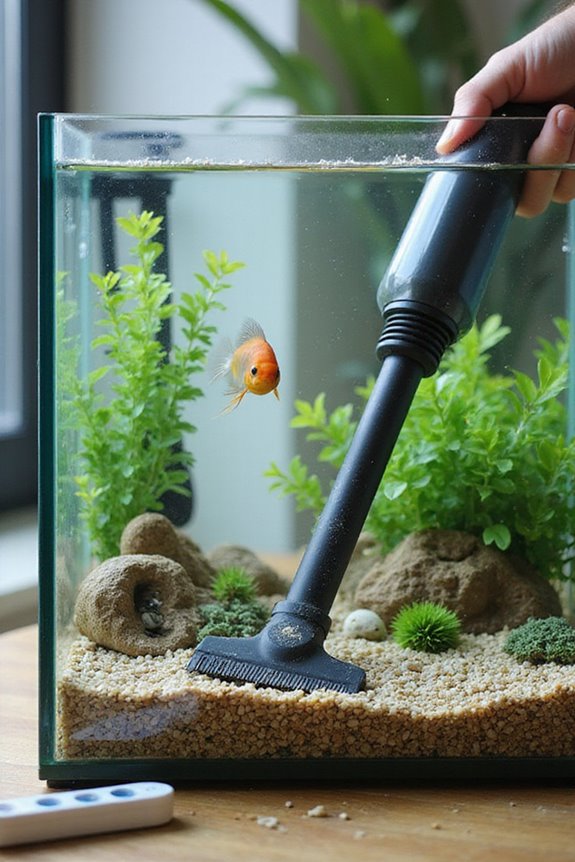
Cleaning and maintenance during a water change are essential for ensuring a healthy environment for your fish. I recommend performing partial water changes weekly, removing no more than 25% of the water at once. Use a siphon or gravel vacuum to clean the substrate, which helps maintain the tank ecosystem by removing waste. Gently scrub the aquarium glass to eliminate algae, being careful not to disturb the fish. Monitor water parameters, including nitrate levels, to adjust your cleaning frequency based on stocking density. Rinse filter media with tank water to preserve beneficial bacteria, and inspect your filter for clogs. These practices not only enhance fish health but also support a stable aquatic environment.
Benefits of Regular Water Changes
Regular water changes play a crucial role in maintaining a healthy aquarium environment, as they directly impact the well-being of your fish and plants. By diluting harmful toxins like ammonia and nitrates, I guarantee ideal water quality, which reduces stress and disease risks. Regular changes also replenish necessary minerals, maintaining a nutrient balance that supports fish growth and enhances their natural behavior. Additionally, they help with algae control by limiting nutrients that fuel unwanted blooms, thereby improving tank aesthetics. Cleaner water enhances light penetration for plants, while also eliminating unpleasant odors. Ultimately, these health benefits contribute to a vibrant ecosystem, promoting longevity and wellness in my aquarium’s inhabitants.
Frequently Asked Questions
Can I Use Tap Water for My Fish Tank?
I’ve found that using tap water for my fish tank can be safe, but it needs proper tap water conditioning. Always consider fish health; testing and treating the water is essential before introducing it into the tank.
How Do I Know if My Water Change Was Successful?
I check my water change’s success by observing water clarity and my fish’s behavior. Clear water and active, stress-free fish usually mean I’ve done a good job maintaining a healthy environment for them.
What Should I Do if I Accidentally Remove Too Much Water?
If I’ve drained too much water, my heart races. I’d slowly perform a water refill, matching parameters perfectly, ensuring my fish’s recovery is smooth and their world feels safe again. Patience is key in this delicate dance.
How Often Should I Test My Water Parameters?
I recommend testing your water parameters every 2-3 days during the initial setup. After that, monitoring every 2-4 weeks helps catch any parameter fluctuations, ensuring a healthy environment for my fish.
Can Water Changes Stress My Fish?
I once saw my fish darting around like they’d been startled, showing me how sensitive they are. Yes, water changes can stress fish, especially if water temperature fluctuates, impacting their behavior and overall health.