As an Amazon Associate, we earn from qualifying purchases. Some links on this site are affiliate links at no extra cost to you. Our recommendations are based on thorough research and editorial judgment.

Do Fish Feel Pain When Hooked? Scientific Evidence

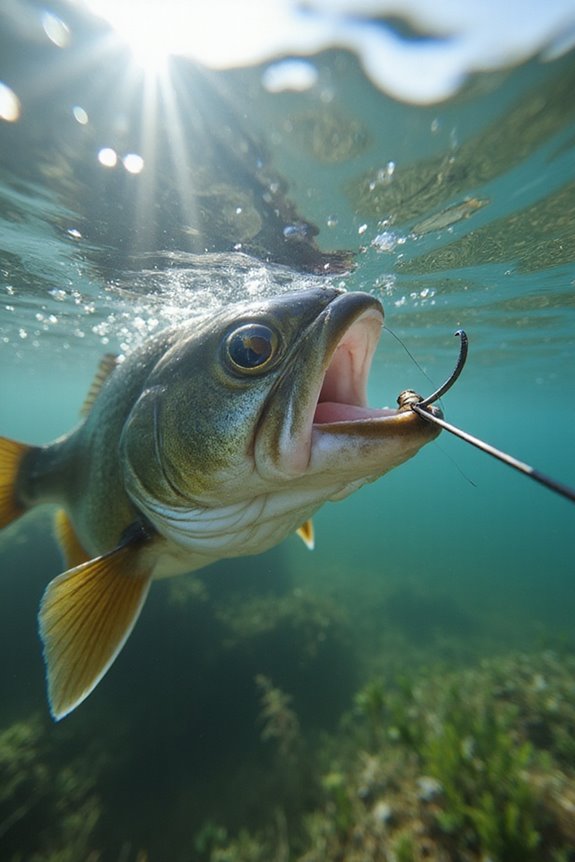
Yes, fish feel pain when hooked, as they possess nociceptors that react to harmful stimuli. Scientific evidence shows that hooking leads to significant stress responses, such as increased cortisol levels. Behavioral changes, like stopping feeding after a painful encounter, indicate that fish remember pain. To minimize suffering, consider using barbless hooks and practicing quick catch-and-release techniques. By adopting humane handling methods, you can improve fish welfare. There’s much more to discover about fish pain and ethical fishing practices.
Key Takeaways
- Fish possess nociceptors that detect harmful stimuli, suggesting they can experience pain when hooked.
- Behavioral changes in fish, such as altered feeding patterns, indicate they respond to painful experiences.
- Studies show fish exhibit pain memory, modifying behavior long after experiencing harmful stimuli.
- Physiological stress responses, including increased cortisol levels, occur when fish are hooked or fought.
- Ethical considerations are leading to revised fishing practices and regulations to minimize fish suffering.
Neurological Basis of Pain in Fish
You may be interested
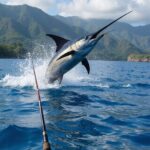


Understanding the neurological basis of pain in fish is essential for both ethical angling practices and fish care. Fish have nociceptors, specialized receptors that react to harmful stimuli, like hooks or extreme temperatures. When these nociceptors activate, they send signals through the peripheral nervous system to various brain structures. This process goes beyond simple reflexes; it shows that fish can process pain signals in a complex way. Studies reveal that areas such as the cerebellum and telencephalon are involved in this pain processing. For anglers, knowing that fish experience pain can change how we approach catch-and-release practices. Using barbless hooks and minimizing handling can help reduce stress on our aquatic friends, promoting their well-being post-catch. Anglers can also monitor barometric pressure to time their fishing trips when fish are more active and less likely to experience prolonged stress during capture.
Recommended Products

【Quality Material】- The carp hooks made of high carbon steel, anti-rust, can use a long time. The sharp hooks usually grip safely in the lip of the fish. This makes it difficult for the fish to spit the hook

Barbless Design - Fishing Hooks feature a barbless needle-sharp point for instant penetration and ultra-easy hook removal. Minimize fish injury and maximize survival rates. Perfect for catch-and-release fishing

BARBLESS HOOKS: Barbless fishing hooks are made of high carbon steel, super-sharp hooks which owns corrosion-resistant characteristics for long time use.
Behavioral Evidence of Pain Experience
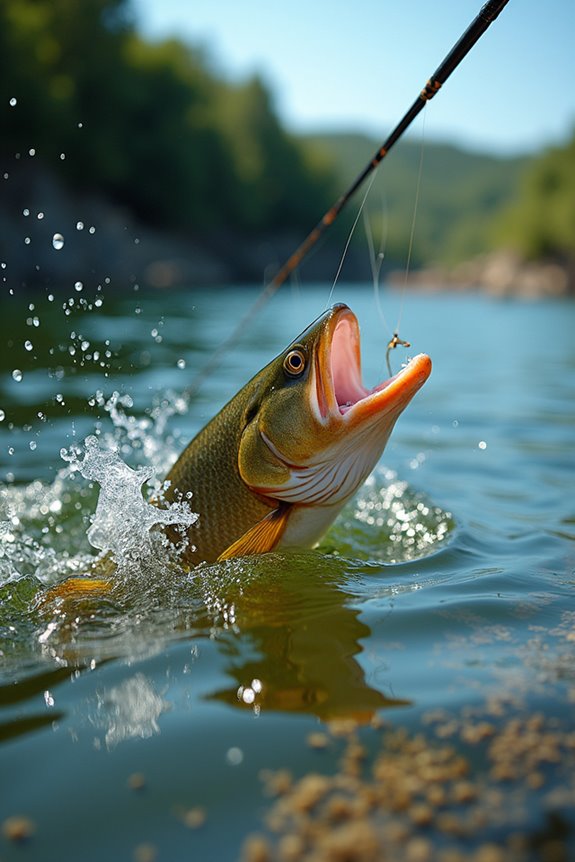
Behavioral evidence strongly supports the idea that fish experience pain in ways that go beyond mere reflex actions. For instance, when rainbow trout received painful injections, they exhibited notable behavioral responses, like stopping feeding and rubbing against tank walls. After exposure to heat, fish showed signs of pain memory, displaying fear and altered behavior long after the stimulus. Additionally, fish injected with painful substances demonstrated reduced distress behaviors when given analgesics, showing that their reactions aren’t just reflexive. Chased fish exhibited fear-driven behaviors, indicating an emotional response linked to distress. These observations suggest that fish possess the ability to learn and modify their behaviors based on past painful experiences, challenging the belief that their responses to hooks or injury are purely reflexive. For ethical fishing, using proper fish lip grippers can minimize unnecessary pain when handling fish during winter fishing expeditions.
Recommended Products
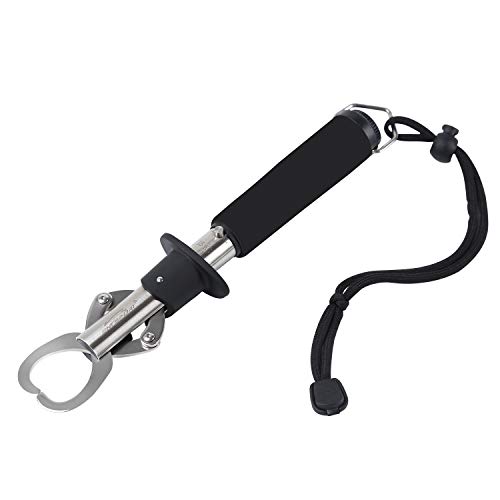
High quality corrosion-resistant stainless steel construction

Ergonomic Non-Slip Grip: Features a comfortable, non-slip elastomer handle, ensuring a secure grip in wet conditions and enhancing user control.

Firmly Holds Fish: The Booms Fishing G05 fish grips is unique designed with a fish mouth opener on the jaws, makes easy to open fish mouth with one hand. Also with the tooth-shapped jaws, lock when squeezed shut to firmly hold the fish with one hand.
Scientific Debate and Perspectives
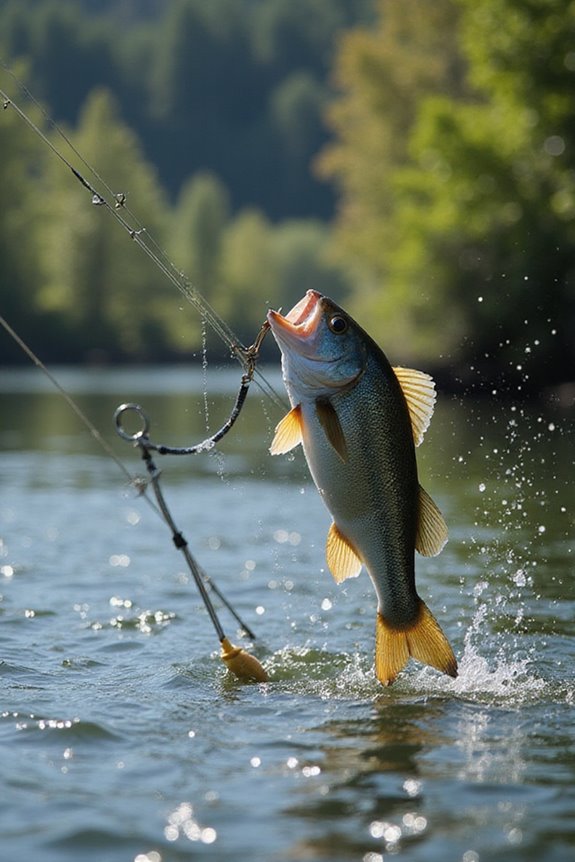
The scientific debate surrounding fish pain has persisted for over five decades, reflecting the complexity of understanding pain across different species. Researchers grapple with fish pain perception, questioning whether these aquatic creatures experience pain as we do or simply react to harmful stimuli. Evolutionary biology adds another layer of complexity, as fish species like sharks and bony fish are distantly related. This makes it hard to generalize findings across the diverse fish family. While fish have nociceptors and show brain activity in response to pain, it remains unclear if they possess conscious awareness of that pain. Many anglers are addressing these ethical concerns by adopting biodegradable fishing lines that reduce environmental impact should fish break free while hooked. As we study fish behavior and physiology, the emerging consensus suggests some level of pain experience, but the debate continues, influencing fishing practices and regulations.
Recommended Products
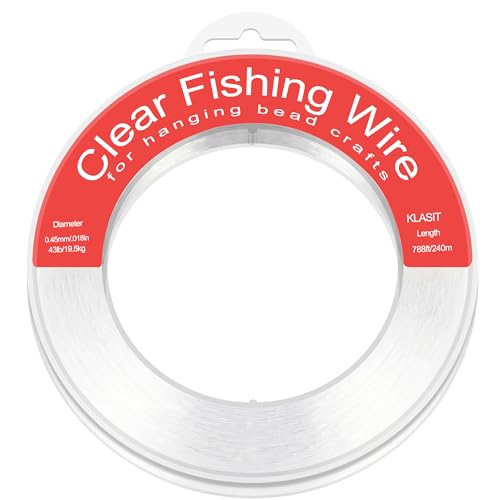
Monofilament Fishing Line Size: This clear fishing line measures 240 m/788FT length with a 0.45 mm/.018 in diameter, giving you plenty of line for extended use. Strong yet nearly invisible, it’s ideal not only for fishing but also for hanging decorations, DIY crafts, jewelry making, and beading projects.

CAST FURTHER & LASTS LONGER- Beyond Braid has a smooth fluoropolymer coating that allows for more efficient casts and longer distances every time. A thinner diameter slices through your guides and allows you to pack more line onto your reel.

Strong Knot Strength - Dynamically incorporated strands in KastKing SuperPower Braided Lines allow you to easily tie a more solid knot; you can even tie an improved clinch knot. The special proprietary treatment (without a waxy coating) allows the supple fishing line to zip through the guides to your target and gives you better lure swimming action.
Physiological Responses to Hooking Injury
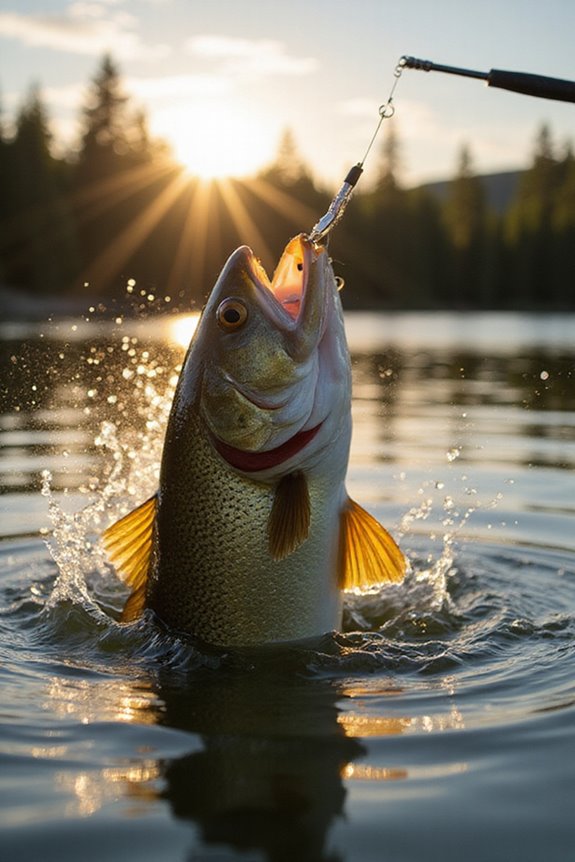
When fish are hooked, they experience a range of physiological responses that can markedly affect their health and survival. Hooking injuries, particularly when hooks embed in sensitive areas like the gills or gut, lead to significant stress responses. For instance, longer fight times increase cortisol levels and disrupt ion balance, complicating recovery. Using barbless or circle hooks can reduce tissue damage and improve the chances of a swift release. I recommend fishing in cooler waters with adequate oxygen levels to minimize stress. Additionally, pay attention to your technique; avoiding excessive struggle can lessen the physiological impact on the fish. By choosing the right equipment and practices, we can help guarantee fish have a better chance of survival after being caught.
Recommended Products

BARBLESS HOOKS: The barbless fishing hooks come with extra long reversed point for easy hook penetration and removal,make it easy to catch fish and decrease the mortality rate.

HIGH STRENGTH: Barbless fishing hooks are made of high carbon steel, strong, corrosion-resistant and anti-rust for long time use

Barbless Hooks: Barbless fishing hooks with sharp needle point for hooking the worm & catching fish easily; Strong short shank for pulling in & holding in better; Curved Back Eye keeps perfectly closed for higher breaking strains of line
Implications for Fisheries and Animal Welfare
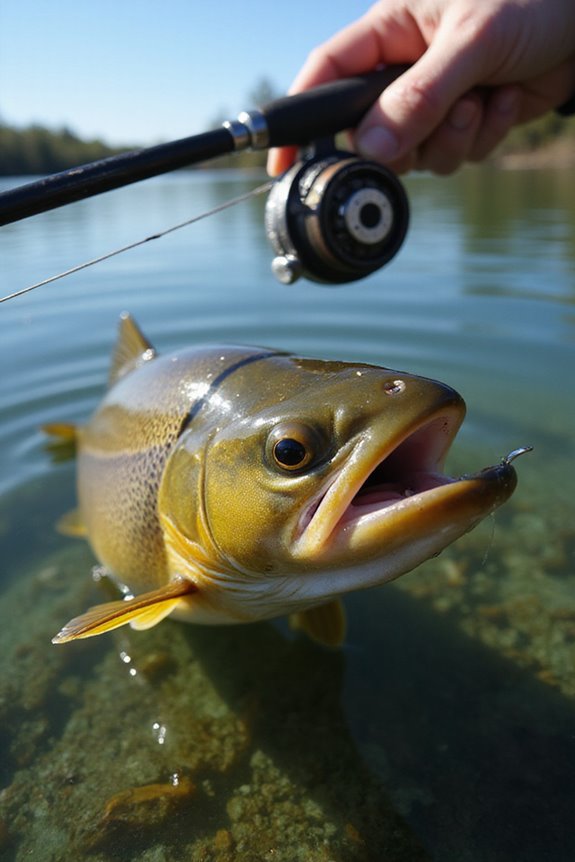
Recognizing that fish can feel pain has significant implications for both fisheries management and animal welfare. This awareness has prompted changes in fishing regulations, pushing for the use of barbless hooks and quicker handling to minimize injury. Catch-and-release practices are now evaluated to guarantee fish experience less stress during release. Welfare advocacy is gaining traction, with organizations pushing for legal recognition of fish pain, influencing industry standards. Training programs for anglers increasingly include humane handling techniques, focusing on reducing harm. As a result, ethical fishing practices are evolving, balancing sustainability with the need to respect fish welfare. Innovations in fishing gear and methods are also emerging, promoting more humane alternatives that align with these new welfare standards.
Recommended Products
Barbless Design - Fishing Hooks feature a barbless needle-sharp point for instant penetration and ultra-easy hook removal. Minimize fish injury and maximize survival rates. Perfect for catch-and-release fishing

PREMIUM MATERIALS-Barbless fishing hooks are made of premium high carbon steel materials,strong and anti-corrosion,sharp and long-lasting,suit for both freshwater and saltwater
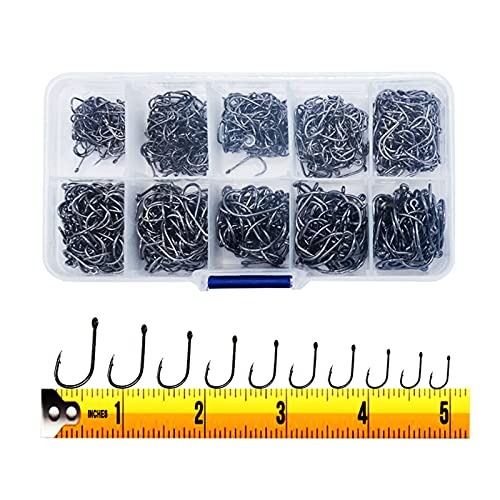
OUR PRODUCTS: A reasonable combination of fish hooks, 3#, 4#, 5#, 6#, 7#, 8#, 9#, 10#, 11#, 12#, a total of 10 types of fish hooks 30PCS each.
Summary of Key Scientific Findings
Understanding the key scientific findings on fish pain perception is vital for anglers and those involved in fisheries management. Research shows that fish have nociceptors, pain receptors similar to those in mammals, which activate upon injury. Signals from these receptors reach brain areas related to conscious experience, indicating that fish can perceive pain. Behavioral studies reveal that fish exhibit signs of distress when injured, such as rapid gill movements and avoidance of painful stimuli. Additionally, painkillers effectively reduce these distress behaviors, suggesting a conscious pain response. Recognizing these findings is important for improving fish welfare during catch-and-release practices. By using barbless hooks and minimizing air exposure, we can help guarantee a more humane fishing experience while respecting the fish’s pain perception.
Frequently Asked Questions
How Do Different Fish Species Respond to Pain?
I’ve noticed that different fish species exhibit unique pain perception behaviors. For example, goldfish show prolonged reactions, while rainbow trout quickly avoid harmful stimuli, highlighting fascinating species variations in how they respond to pain.
Are Certain Fishing Practices More Humane Than Others?
When I think about fishing gear, I’m torn; some catching techniques seem gentler than others. Using barbless hooks and rubber nets feels more humane, ensuring fish experience less trauma, ultimately promoting better survival after release.
What Role Does Stress Play in Fish Pain Perception?
I think stress plays a significant role in fish pain perception. Stress hormones trigger various behavioral responses, heightening awareness and sensitivity to pain, which suggests their experiences are more complex than I once believed.
Can Fish Develop Long-Term Effects From Painful Experiences?
Absolutely, I’ve learned that fish can develop pain memory from painful experiences. They often show significant behavioral changes, like altered feeding and increased wariness, indicating lasting effects that impact their overall well-being and survival.
How Can Anglers Reduce Fish Pain During Catch-And-Release?
When I’m fishing, I always use barbless hooks and gentle catch techniques. These methods minimize injury and stress, ensuring a quicker release and better chances for the fish to recover after our encounter.